For residents of the Piedmont Triad, winter weather brings a familiar sense of dread, not necessarily from snow, but from ice. While snow can be heavy, ice is the true enemy of our trees. In Winston-Salem, where ice storms are a seasonal reality, the accumulation of frozen rain turns beautiful canopies into ticking time bombs.
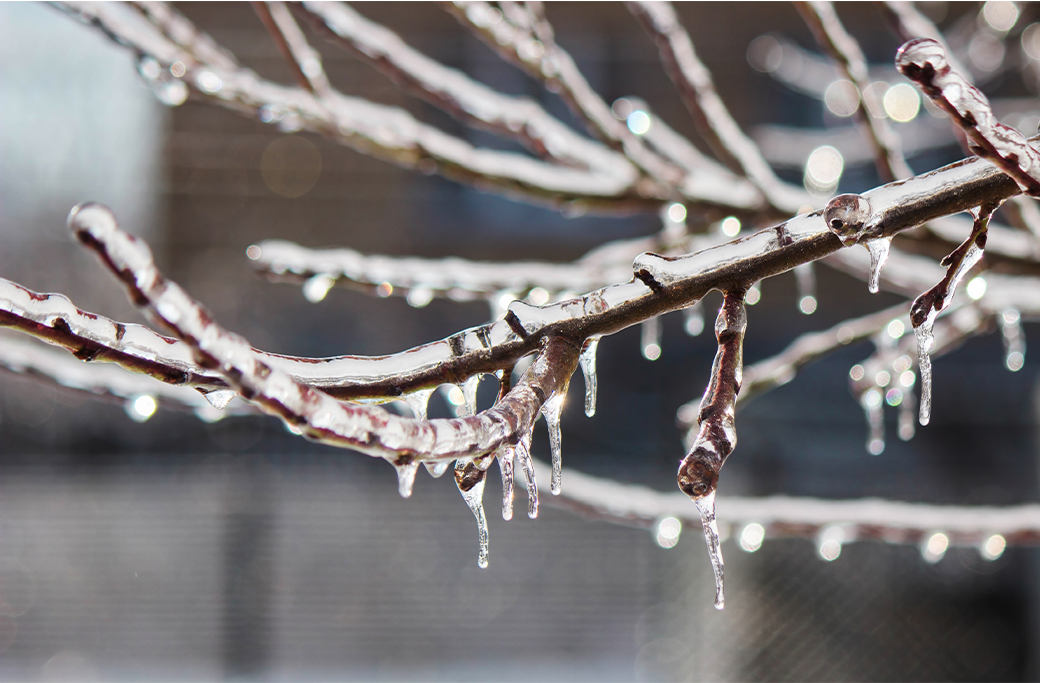
The danger lies in the physics of freezing rain. Unlike snow, which can sometimes blow off branches, ice encases them, adding immense weight that many species simply cannot support. A mere half-inch of ice can increase the weight of a branch by 30 times. When you combine that load with winter winds, the structural integrity of even the healthiest tree is tested.
Knowing what to look for before, during, and after an ice storm can be the difference between a safe property and a costly disaster. Identifying both subtle and obvious signs of ice storm tree damage helps homeowners protect their homes, families, and surrounding property.
Why Ice Storms Cause So Much Tree Damage
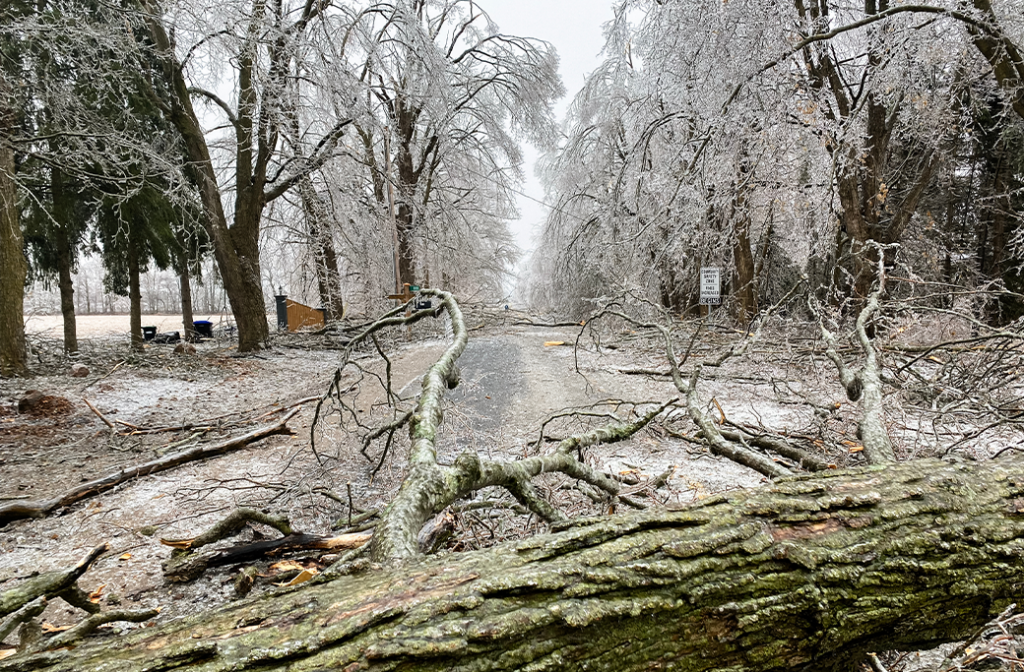
It’s easy to underestimate the power of ice until you hear the sickening crack of a limb in the middle of the night. Ice storms are particularly devastating because they attack a tree’s structure in a way that snow usually doesn’t. The sheer density of ice creates a heavy load that pulls branches downward, testing the tensile strength of the wood fibers.
When wind is added to the equation, the risk of failure skyrockets. The frozen branches become rigid and brittle, losing their natural ability to sway and absorb wind energy. Instead of bending, they snap.
In our region of North Carolina, certain local species are more vulnerable than others. Fast-growing trees often have weaker wood that splits easily under pressure. Common offenders in Winston-Salem include:
-
- Bradford Pears: Notorious for their weak branch unions, these are often the first to fail.
- White Pines: Their soft wood and evergreen needles (which hold more ice surface area) make them susceptible to snapping.
- Maples: While generally sturdy, silver and red maples with poor branch structure often lose large limbs.
- Mature Oaks: even these giants can lose massive limbs if they have internal decay that went unnoticed during the growing season.
Warning Signs of Ice Storm Tree Damage
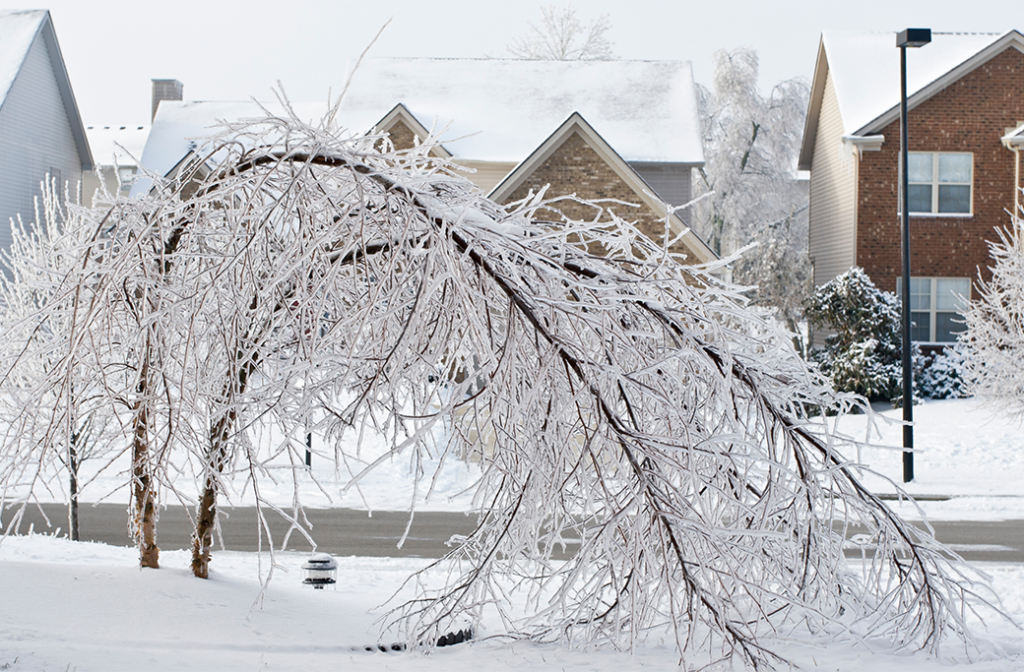
Identifying damage early is critical. You need to know what to listen for and what visual cues suggest a tree is about to fail.
During the Storm
Safety is of the utmost importance while the storm is active. Stay indoors, but keep your eyes and ears open.
-
- Audible Cracking: If you hear loud popping or cracking sounds (often described like a gunshot), a major limb or trunk failure is imminent.
- Significant Bending: Trees are designed to bend, but there is a breaking point. If a tree is bent over significantly more than usual and doesn’t recoil between wind gusts, it is under extreme stress.
- Sagging Evergreens: Watch for pine or cedar limbs sagging low enough to touch roofs, gutters, or power lines.
- Root Heave: If you see the soil around the base of a tree lifting or cracking, the root plate is failing, and the entire tree could topple.
After the Storm
Once the ice melts, the danger hasn’t necessarily passed. “Widowmakers” (broken limbs hanging loosely in the canopy) can fall days or weeks later.
-
- Hanging Limbs: Look up. Are there detached branches caught in the canopy?
- Vertical Cracks: Inspect the trunk for fresh, light-colored wood showing through vertical splits. This indicates the tree twisted or failed under the load.
- New Leans: Did a tree that stood straight yesterday suddenly develop a lean today? This suggests root damage.
- Bark Damage: Look for areas where bark has been ripped away, which can expose the tree to disease and pests later in the season.
Trees Most at Risk During Ice Storms
Not every tree on your property faces the same level of risk. A healthy, well-maintained hardwood has a fighting chance against a quarter-inch of ice. However, trees with pre-existing issues are statistically more likely to fail.
Trees most at risk include:
-
- Overgrown or Unmaintained Trees: Dense canopies act like a sail in the wind and provide more surface area for ice to accumulate.
- Structurally Compromised Trees: Trees with co-dominant stems (two trunks of equal size growing from the same point) or included bark are prone to splitting down the middle.
- Diseased Trees: Rot and decay weaken the wood from the inside out. A hollow tree might look fine until it’s loaded with a thousand pounds of ice.
- Proximity to Targets: Trees growing too close to driveways, utility lines, or foundations pose the greatest threat to property, regardless of their health.
Ice Storm Tree Safety Tips for Homeowners
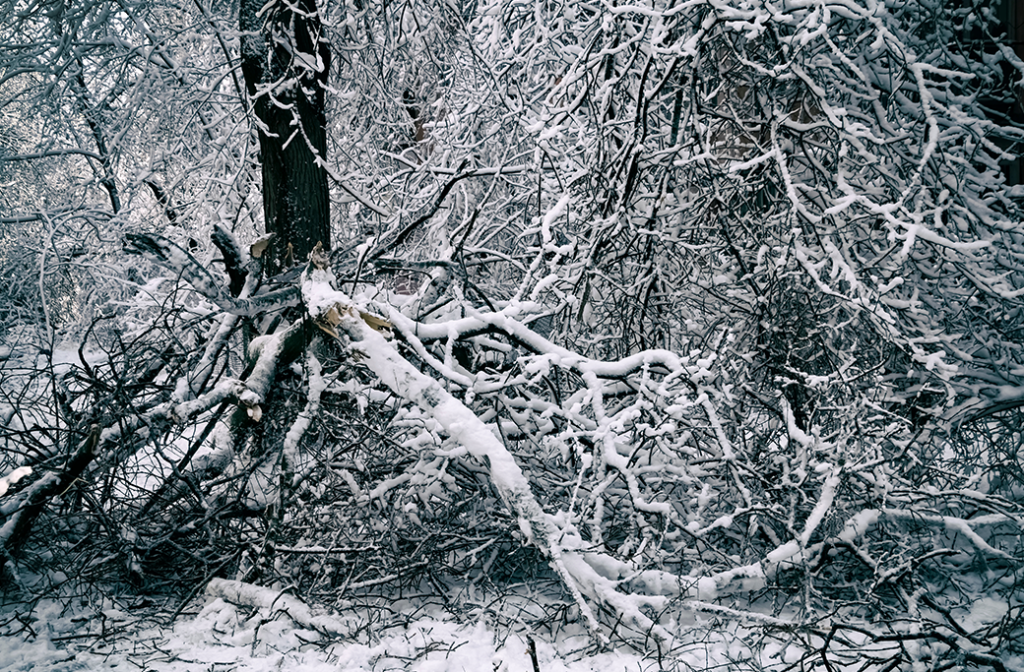
When your yard looks like a frozen war zone, it is tempting to run out and start cleaning up immediately. However, post-storm cleanup is one of the most dangerous times for homeowners.
What You Should Do
-
- Stay Clear: Rope off areas with damaged trees or hanging limbs.
- Protect Family and Pets: Keep children and animals inside until the area is deemed safe.
- Document Everything: Take clear photos of the damage before moving anything. This is vital for insurance claims.
- Call a Professional: For anything larger than a small branch on the ground, contact a certified tree service.
What You Should NOT Do
-
- Do Not Shake Trees: It is a myth that you should shake branches to remove ice. This can cause the limb to snap instantly due to the sudden change in tension, often injuring the person below.
- Avoid DIY Removal: Do not attempt to cut large or elevated limbs yourself, especially on a ladder in icy conditions. Chainsaws are unpredictable when cutting wood under tension.
- Stay Away from Power Lines: Never approach a tree touching a power line. Assume all lines are live and dangerous.
When to Call a Professional Tree Service
While picking up small twigs is a Saturday afternoon chore, handling storm damage is a professional operation. You should call a professional tree service if you notice:
-
- Trees leaning toward your home, garage, or neighbor’s property.
- Large limbs (wrist-size or larger) hanging precariously overhead.
- Trees that have split down the trunk or partially uprooted.
- The need for a post-storm inspection to identify hidden cracks high in the canopy.
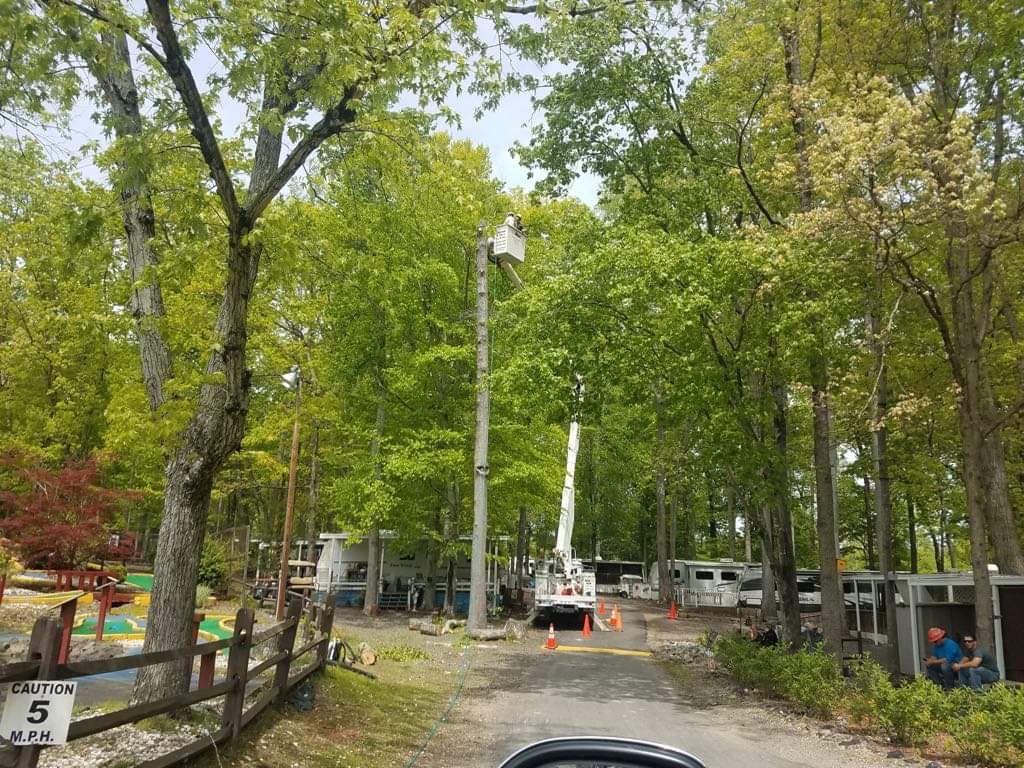
As a locally owned Winston-Salem tree service, Shannon & Sons responds quickly after ice storms to help homeowners stay safe and protect their property. We have the heavy equipment and experience necessary to handle hazardous removals safely.
How Preventative Tree Maintenance Reduces Ice Storm Damage
The best time to deal with an ice storm is before the first freeze. Preventative maintenance is your insurance policy against winter weather.
Dormant-season trimming and proper pruning significantly reduce the risk of failure. By removing weak, dead, or overextended limbs, you reduce the surface area available for ice accumulation. Structural pruning, especially for young trees, establishes a strong architecture that can withstand heavy loads in the future.
In North Carolina, dormant-season trimming is ideal because the lack of leaves allows arborists to see the structural defects clearly. It also minimizes stress on the tree.
Ice Storm Tree Damage Warning Signs for Winston-Salem Homes
Ice storm damage isn’t always obvious to the untrained eye. A hairline fracture in a major limb might hold for months before finally giving way during a spring thunderstorm. Early action prevents these secondary failures.
Don’t wait for the forecast to call for freezing rain. Be proactive about the health of your trees.
Concerned about ice storm damage on your property? Contact Shannon & Sons Tree Service for professional tree inspections, storm damage cleanup, and emergency services in Winston-Salem and surrounding areas.