As March rolls into the Piedmont Triad region, many Winston Salem homeowners start eyeing their trees with pruning shears in hand. The urge to trim trees as soon as the weather warms is understandable. Winter storms leave behind broken branches, and overgrown limbs suddenly become obvious once the rain lets up.
Here’s what you need to know: late winter to early spring (February through early April) is usually the ideal window for pruning trees in Winston Salem and surrounding areas. However, some tree species and specific situations call for a different approach or professional evaluation. Our region’s wet winters and warm, humid summers make correct spring tree pruning especially important for preventing breakage, disease, and drought stress down the road.
Shannon & Sons Tree Service is a local, family-owned Winston Salem company with ISA Certified Arborists who safely trim trees in every season. In this guide, we’ll cover everything you need to know about spring pruning in the Piedmont Triad:
- Can you prune in spring, and when exactly?
- What to trim and what to leave alone
- Which trees should wait until summer or winter
- When to call a professional tree service
- FAQs for Winston Salem-area homeowners
Can You Trim Trees in Spring in Winston Salem?
Yes, you can trim trees in spring, but timing and how much you remove matter significantly for your trees’ overall health.
The “classic” dormant pruning window around Winston Salem runs roughly from November through early March, when most deciduous trees are leafless and insect and disease activity remains low. During this dormant season, trees experience less stress from pruning, and you can see the branch structure clearly without foliage blocking your view.
That said, light spring pruning in March through May is perfectly fine for most landscape trees when you focus on safety issues and removing dead or damaged limbs. The key is keeping live-wood removal minimal.
Risks of heavy pruning after buds have opened include:
-
- Reduced flowering for the following season
- Increased stress during summer heat
- Greater exposure to pests like borers and fungal pathogens
- Slower wound closure and potential decay
Shannon & Sons can evaluate on-site whether a particular tree in spring is safe to prune heavily or should wait until next dormant season. This assessment prevents improper pruning that could compromise your tree’s natural form and long-term health.
Early Spring Tree Trimming (March–Early April)
Late March through early April (before full leaf-out in many deciduous trees) offers a practical window for addressing winter damage and safety concerns.
Safe tasks for early spring include:
-
- Removing clearly dead, broken, or storm-damaged branches left over from winter snow or wind
- Cutting back damaged limbs that hang over driveways, walkways, or structures
- Eliminating weak branches that show cracks or splitting from ice loads
When removing live wood, keep cuts conservative. For young trees, remove no more than 15–20% of live branches in a single season. For mature trees, stick to 10% or less to avoid shocking the plant’s system.
Cuts made just before the growth flush of April and May typically seal faster, which reduces decay risk when cuts are properly placed outside the branch collar. However, aggressive thinning or “lion-tailing” (stripping interior branches) in early spring can cause sunscald on previously shaded bark, weak branch attachments, and long-term decline.
Example: Removing a cracked limb over your driveway in March is appropriate DIY work for small branches under 2 inches thick. Large limbs, especially those near your roof or power lines, should be left to our crew at Shannon & Sons.
What to Trim in Spring, and When to Wait
Understanding which trees and shrubs benefit from spring pruning (and which need a different schedule) helps you maintain your property without accidentally harming your landscape investment.
Good Spring Candidates
Several pruning tasks make sense during the early spring window:
-
-
- Dead or diseased limbs on maples, oaks (with caution), and fruit trees
- Suckers and water sprouts on apples, pears, and ornamental plums after the worst winter cold has passed
- Small crossing branches or those rubbing on roofs, fences, or gutters
- Entire branches that are clearly dead and pose falling hazards
-
Removing dead branches and broken branches early prevents them from becoming projectiles during spring windstorms common in the Piedmont Triad.
Pruning After Bloom
Many spring flowering trees and shrubs in the Winston Salem area should be pruned just after they finish blooming. This timing ensures you don’t accidentally cut off next year’s flower buds, which form on old wood.
Wait until after bloom for:
-
-
- Forsythia
- Flowering cherry
- Flowering quince
- Magnolia
- Some crabapple varieties
-
If you prune these spring bloomers in late winter or early spring before they flower, you’ll sacrifice this year’s bloom entirely.
Pruning to Postpone
Postpone heavy structure changes on stressed trees—those showing significant dieback from drought, bark damage, or last year’s wildfire smoke exposure. A certified arborist should evaluate these trees before any major crown reduction or thinning work.
Shannon & Sons can create a multi-year pruning plan so older shade trees are corrected gradually rather than over-pruned in a single spring. This approach protects tree health while still achieving your goals for shape and safety.
Trees Better Suited to Late Spring or Early Summer Pruning
Below is a helpful guide to native Central North Carolina trees that thrive when pruned in spring, ideally right after they finish blooming:
|
Tree |
Optimal Pruning Time in Spring |
Reason to Prune in Spring |
|---|---|---|
|
Eastern Redbud |
Immediately after flowering (April) |
Preserves next year’s flower buds |
|
Flowering Dogwood |
Late spring, after blooms fade (April–May) |
Avoids cutting off developing flower buds |
|
Fringe Tree |
Right after flowering (May) |
Maintains natural shape and maximizes flowering |
|
Serviceberry |
After flowering (April) |
Encourages healthy growth without sacrificing blooms |
|
Carolina Silverbell |
After blooms drop (April–May) |
Protects flower production for the next season |
|
Sweetbay Magnolia |
Late spring to early summer |
Best pruned once new growth has started |
Key Tip for Spring-Flowering Trees in Central NC:
Always prune immediately after blooming finishes. Avoid pruning in late winter, as this risks removing next year’s flower buds and diminishing your tree’s seasonal beauty.
Trees to Avoid Trimming in Spring
In Central North Carolina, certain tree species become significantly more vulnerable to insect infestations and diseases when pruned during the growing season. Spring pruning on these trees can lead to serious health problems that outweigh any short-term benefits. Understanding which trees to avoid trimming in spring helps protect your landscape investment and promotes long-term tree health.
White Oak and Other Native Oaks
This group includes Southern Red Oak, Willow Oak, Post Oak, and other native oak species. Pruning these oaks during the warm spring months increases the risk of oak wilt and other fungal infections. Sap-feeding beetles, which are most active as temperatures rise, can easily transmit diseases through fresh pruning wounds.
Safest pruning window: Mid-winter (December through February), when insect activity is at its lowest.
American Elm and Other Elm Species
Elms are highly susceptible to Dutch elm disease, which is spread by elm bark beetles attracted to fresh pruning cuts during the growing season. Infection can cause rapid decline and death of the tree.
Safest pruning window: Late winter, while the tree is dormant.
Eastern White Pine and Virginia Pine
These conifers generally require minimal pruning. Heavy cuts in spring can stimulate tender new growth that is vulnerable to pests and tip blight, and may cause structural imbalance.
Recommended pruning: Only remove dead, damaged, or hazardous limbs during the growing season. Structural pruning is best done in late winter.
Black Walnut
Black walnuts tend to “bleed” sap heavily in late winter and early spring. Pruning during this time can stress the tree and increase its susceptibility to disease.
Better timing for pruning: Mid-to-late summer (July–August) or mid-winter to minimize stress and disease risk.
By respecting these species-specific pruning windows, you can help ensure your trees remain healthy and resilient throughout the seasons.
Stressed trees
Mature trees exposed to drought, root damage from construction, or recent transplanting should not be thinned hard in spring. Aggressive removal can trigger further decline when the tree lacks energy reserves.
Shannon & Sons can identify species on-site and recommend the best season for major pruning—sometimes suggesting a January–February schedule instead of April–May. When in doubt, contact a professional tree service before cutting sensitive trees.
DIY Spring Tree Trimming vs. Hiring a Certified Arborist
Knowing when you can safely handle tree trimming yourself (and when to call professionals) saves time, money, and potentially your trees.
Safe DIY Tasks
With proper pruning tools and technique, homeowners can handle:
-
- Removing small dead twigs and branches under 2 inches in diameter within easy reach from the ground
- Using clean, sharp hand pruners and loppers to remove crossing branches and small suckers
- Following the basic three-cut method for small limbs to prevent bark tearing
- Trimming new growth on young trees to maintain shape and structure
Always clean your pruning tools with rubbing alcohol between trees to avoid spreading disease. Sharp blades create cleaner cuts that seal faster than ragged tears from dull tools.
When to Call an ISA Certified Arborist
Professional help is essential for:
-
- Any branch over 4 inches thick, or any branch over roofs, driveways, sheds, power lines, or fences
- Trees with visible decay, fungal conks, deep cracks, or leaning trunks
- Large shade trees in Winston Salem’s older neighborhoods where past topping or poor pruning has weakened structure
- Crown reduction on mature trees near homes
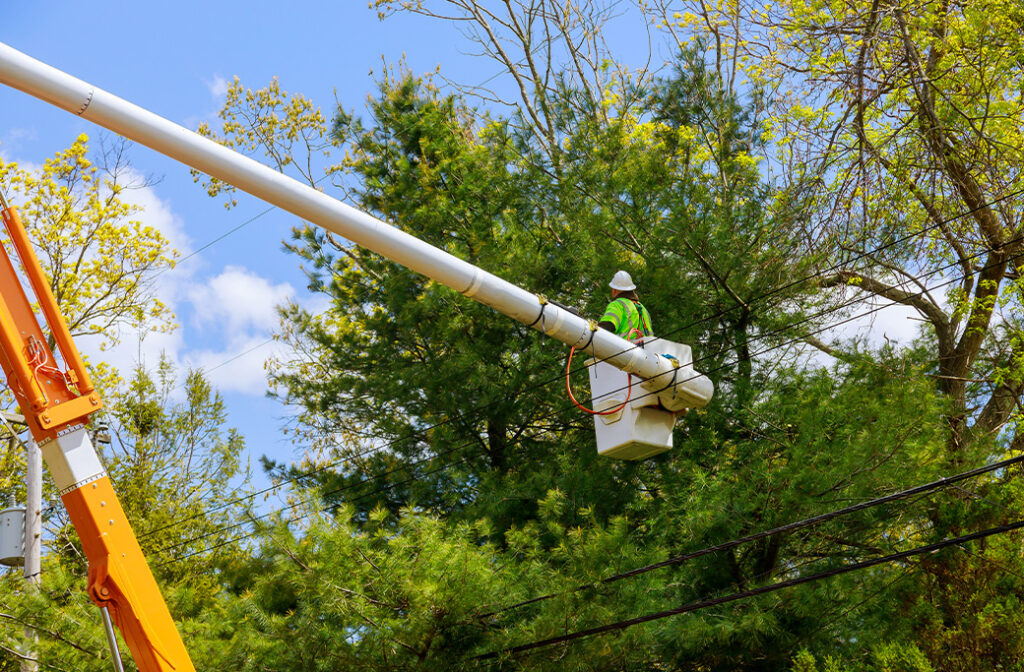
- Any work requiring climbing or aerial equipment
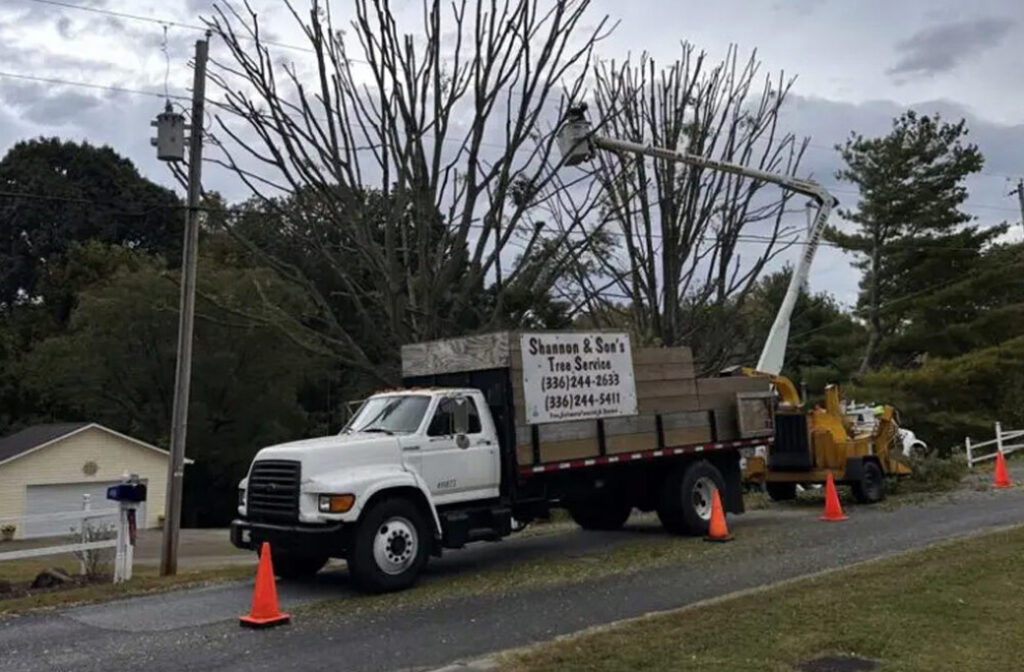
Shannon & Sons offers comprehensive tree service including risk assessment, cabling and bracing when needed, professional climbing and bucket-truck work, and full clean-up with debris removal. Our team handles everything from routine maintenance to emergency storm response throughout the Piedmont Triad.
If you’re unsure whether a job falls within DIY territory, the safest approach is scheduling a spring inspection. Shannon & Sons provides free estimates for Winston Salem-area homeowners looking to protect their trees and property.
Spring Tree Trimming Tips in Winston-Salem, NC
Spring tree trimming in Winston Salem doesn’t have to be complicated when you understand proper pruning practices and know when to call for help. Whether you’re tackling small dead branches yourself or need expert assistance with larger trees, correct timing and technique protect your yard and landscape for years to come.
Ready to get your trees in shape for the season? Contact Shannon & Sons Tree Service for a spring inspection and see why Winston Salem-area homeowners trust their certified arborists with their most valuable trees.