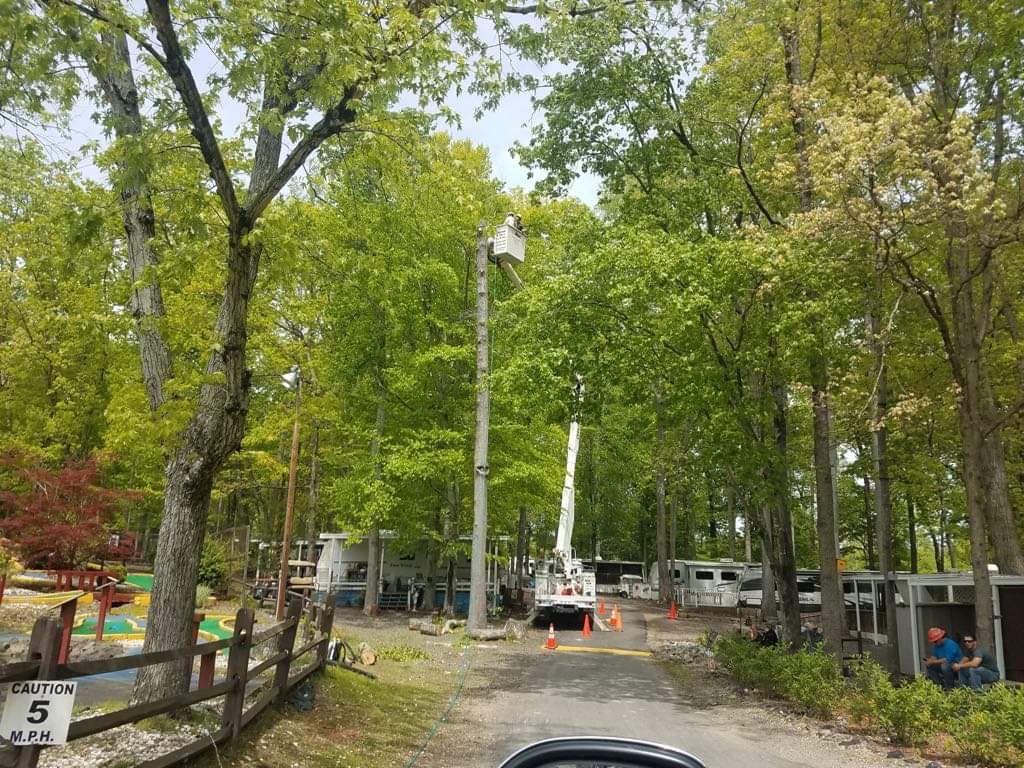
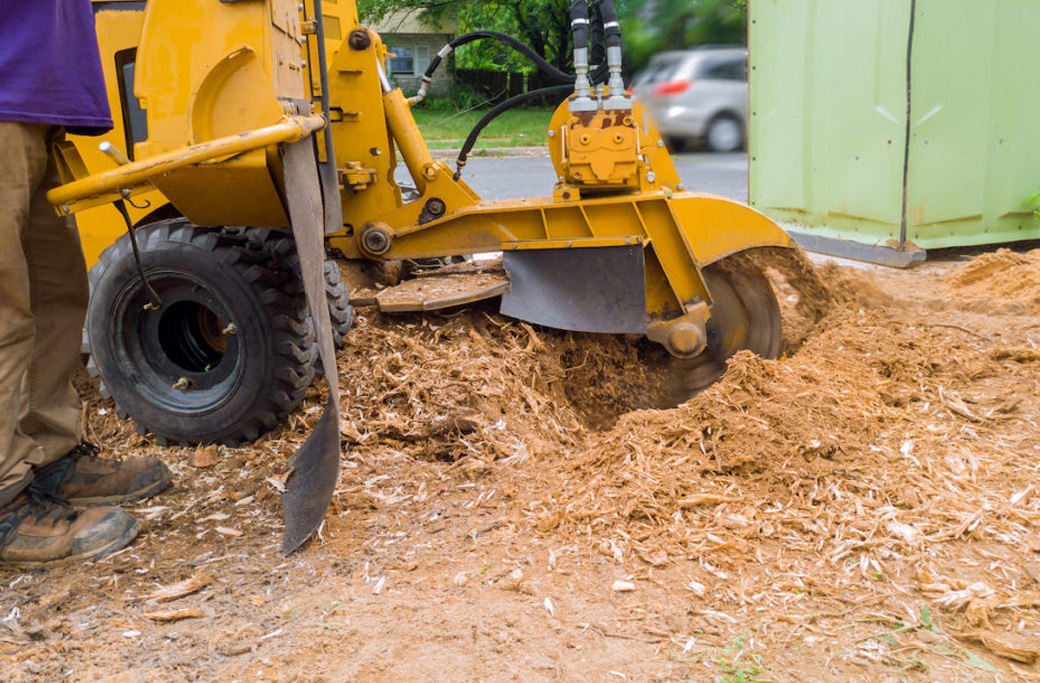
When a tree is removed, the leftover stump can quickly become an eyesore or a safety hazard. Tree trunk grinding is a fast, efficient solution that turns stubborn stumps into small wood chips below ground level, clearing your yard for new landscaping, patios, or open space. Homeowners in Winston-Salem and surrounding Central North Carolina communities can rely on professional stump grinding to restore their property safely and cleanly.
Understanding Tree Trunk (Stump) Grinding
Tree stump grinding is the mechanical process of reducing a tree stump to wood chips using a specialized machine. Unlike complete stump removal, which excavates the entire root system and leaves a large hole requiring extensive backfill, grinding targets only the visible stump and shallow roots. The result is a clean, level surface ready for lawn restoration or replanting.
At Shannon & Sons Tree Service, stump grinding is a standard follow-up to tree removal across our Winston Salem service area and nearby communities.
What grinding involves:
-
- A stump grinder shaves the trunk down inch by inch until it sits below ground level
- Most residential grinds reach 6–12 inches deep, with deeper options for replanting
- The process leaves behind a mix of wood chips and soil that fills the former stump location
- Surrounding lawn, driveways, and other plants remain undisturbed
How Tree Trunk Grinding Works in Practice
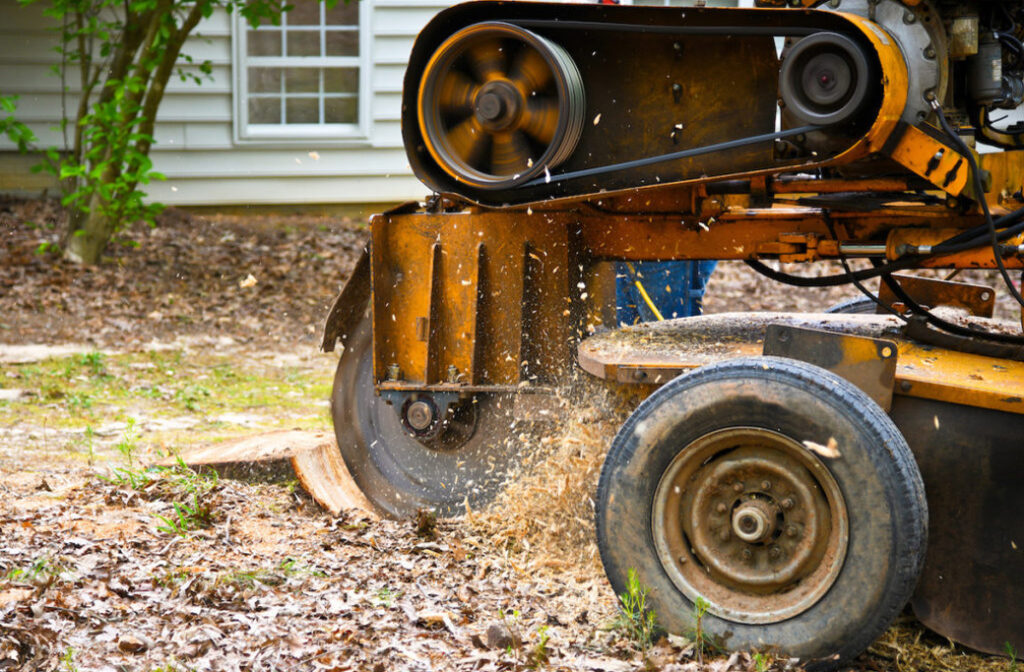
The stump grinder is a robust machine featuring a rotating cutting wheel embedded with sharp carbide teeth. As the operator maneuvers the equipment over the stump, the wheel spins at high speed, chewing through dense wood fibers and converting solid trunk into fine debris.
Grinding depth depends on your plans for the space. For basic lawn restoration where you want to mow over the area, 6–8 inches typically suffices. If you’re planning to plant a new tree or create a garden bed, we grind to 12–18 inches to accommodate healthy root development.
Shannon & Sons can handle stumps in tight backyards, near fences, patios, driveways, and garden beds using appropriately sized grinding equipment—including compact units under 30 inches wide for limited access areas.
Our step-by-step process:
-
- Site inspection to evaluate stump size, wood hardness, and access
- Utility checks via local services to mark gas, water, and electrical lines
- Safety setup including PPE and ground protection
- Systematic grinding in overlapping passes until target depth is reached
- Final cleanup of the work zone, leaving the area tidy
Why You Shouldn’t Leave a Tree Trunk in the Ground
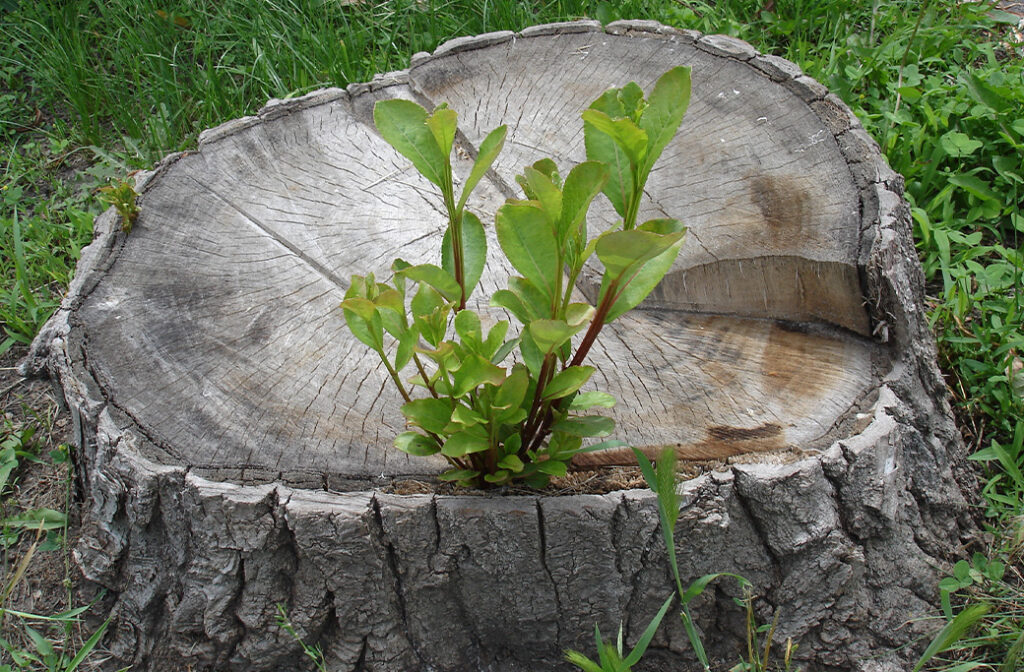
That old stump might seem harmless, but leaving it in place creates compounding problems over time.
Practical hazards and inconveniences:
-
- Trip risks: Uneven protrusions create safety hazards in high-traffic areas and play spaces
- Mowing obstacles: Blades dull on stumps, and scalped edges lead to uneven grass growth
- Pest attraction: A rotting stump becomes prime habitat for carpenter ants, termites, wood-boring beetles, and rodents—pests that can migrate toward your home’s foundation
- Rapid decay: Fungi set in quickly, turning stumps soft and messy within a few seasons
- Regrowth issues: Many tree species send up sprouts from dormant buds, requiring constant cutting or chemical treatments
- Aesthetic drag: Fungal shelves, black rot, and vigorous suckers turn stumps into an unsightly eyesore that affects curb appeal and perceived property value
Studies from arborist associations indicate untreated stumps increase surrounding pest populations by 30–50%. That’s not a risk worth taking when professional stump grinding services eliminate the problem in hours.
Tree Trunk Grinding vs. Full Stump Removal
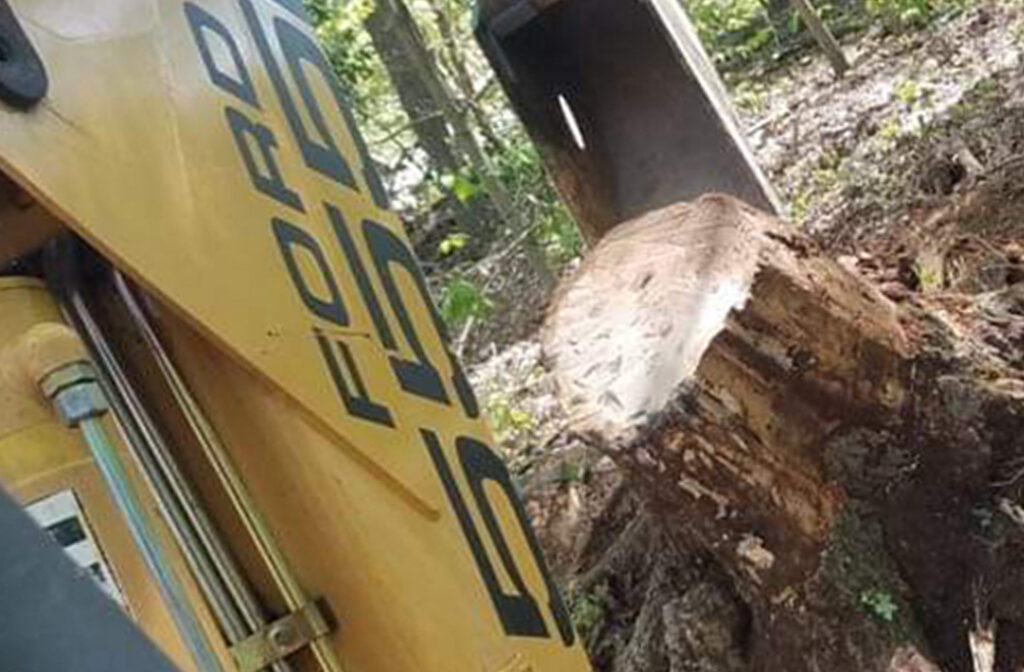
Understanding the difference helps you choose the right stump removal meth
|
Factor |
Stump Grinding | Full Stump Removal |
|---|---|---|
|
What’s removed |
Stump + shallow roots (12–18 inches deep) |
Entire root ball (2–4+ feet deep) |
|
Hole created |
Saucer-shaped depression, minimal |
Crater up to 10 feet wide |
|
Equipment |
Grinder (200–1,000 lbs) | Excavator or backhoe |
|
Soil disturbance |
Minimal |
Extensive |
| Typical cost | $100–$500 |
2–5x higher |
| Timeline | Same-day |
Days to weeks |
When grinding makes sense:
-
- Typical residential yards and play areas
- Lawn restoration projects
- Spaces near structures, irrigation, or hardscaping
- Most homeowner scenarios (roughly 90% of cases)
When removal makes sense:
-
- Future foundations or construction projects
- Major grading or retaining wall installation
- Deep root interference with utilities
What Happens After the Trunk Is Ground
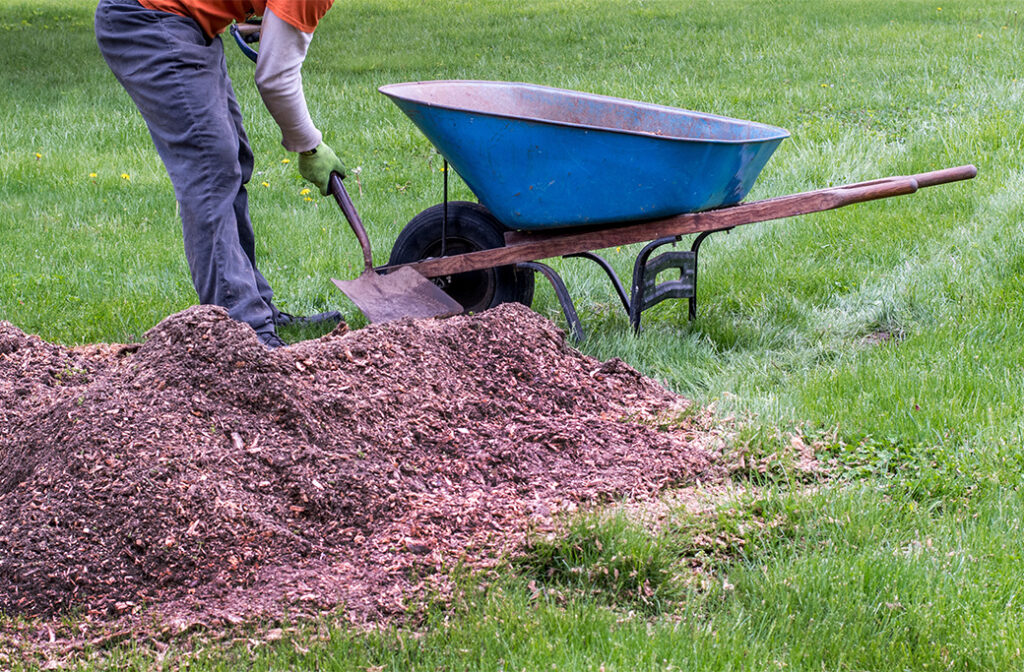
After tree stump grinding, you’re left with a basin of finely shredded wood chips mixed with soil. A 24-inch diameter stump typically yields 1–2 cubic yards of material. Shannon & Sons can leave these chips on-site or haul them away on request.
Aftercare options:
-
- Use chips as mulch: Spread around other plants to suppress weeds and retain moisture
- Fill and reseed: Mix chips with topsoil, grade level, and seed with grass
- Create a planting bed: Remove chips and amend soil for a new garden space
- Monitor settling: Remaining roots decay over 5–10 years, causing 1–4 inches of subsidence—add topsoil as needed
| Can you plant immediately in the same spot?
It’s possible, but shifting a new tree 3–6 feet away avoids root competition. For lawn integration, expect the area to fully blend within 1–3 growing seasons under regular irrigation.
Safety and Why Professional Grinding Matters
DIY stump grinding with rental equipment exposes homeowners to serious risks. The cutting wheel spins at 1,000–2,000 RPM, hurling debris at high velocity. Kickback can flip machines weighing hundreds of pounds. Underground utility strikes can result in explosions, floods, or electrocution.
Why professional grinding matters:
-
- Trained crews: Shannon & Sons operators know how to handle commercial-grade grinders safely and efficiently
- Proper safety gear: Helmets, goggles, ear protection, gloves, and steel-toed boots are standard
- Insurance coverage: Our liability insurance protects your property against accidental damage
- Utility coordination: We routinely contact local utility services before grinding near potential gas, water, or electrical lines
- Property protection: We use ground mats, plywood ramps, and smaller machines when working near driveways, sidewalks, septic systems, and underground irrigation
Owning your own stump grinder or renting one might seem like a way to save money, but the risks (plus dulled teeth at $5–20 each) often outweigh any savings.
Cost, Scheduling, and What to Expect from Shannon & Sons
Tree stump removal pricing depends on several factors: stump diameter, wood hardness (dense walnut or oak costs more than softer fir), root spread, number of stumps, and site access. Tight gates or obstacles may require smaller equipment and additional time.
Shannon & Sons offers free on-site estimates throughout Winston Salem and nearby areas. We can often bundle stump grinding with tree removal to save you 20–30% compared to separate visits.
What happens next:
-
- Initial contact: Call us or submit an online request through shannonandsonstree.com
- Estimate visit: We assess the job and provide transparent, no-surprise pricing
- Scheduling: Flexible appointments, often within the same week
- On-site work: Crews arrive on time in marked trucks with trailered grinders
- Cleanup: Grinding, debris management, and a final walkthrough before we leave
- Follow-up: We check in to ensure your satisfaction
Tree Trunk Grinding Services in Winston-Salem, NC
Ready to rid your outdoor space of that stubborn stump? Contact Shannon & Sons Tree Service today for a free quote on your specific tree trunk grinding project. Whether it’s one stump or several across your property, we’ll handle the job efficiently so you can reclaim your landscape.