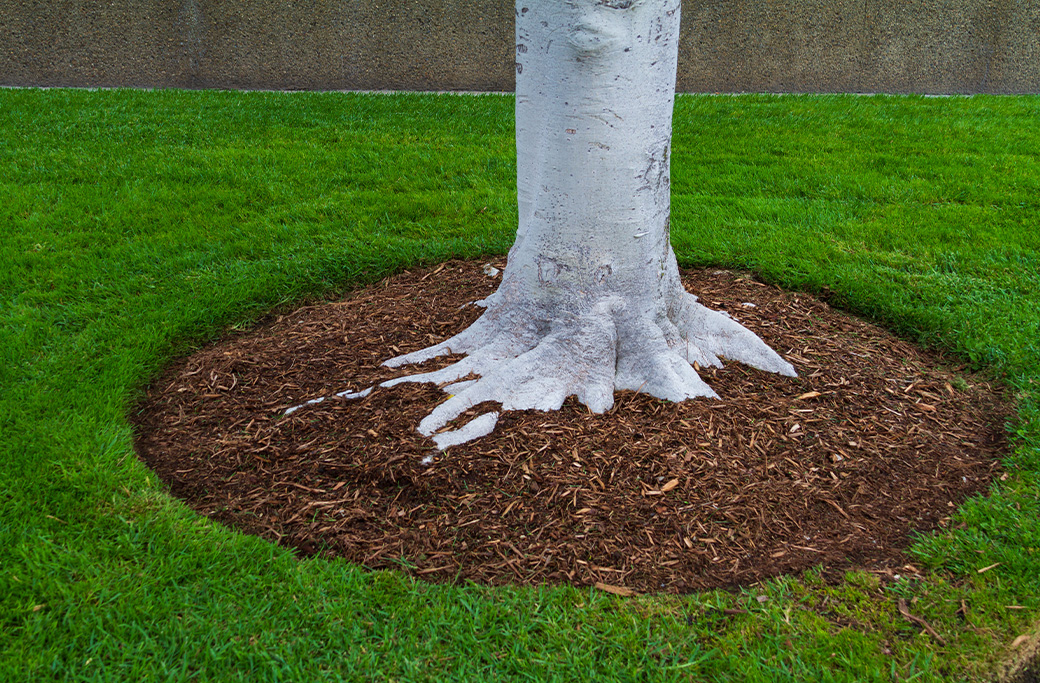
Mulching around trees in late summer helps conserve soil moisture, regulate root temperature, suppress weeds, and improve long-term tree health. Apply 2–4 inches of organic mulch (like hardwood chips or shredded bark) in a wide ring around the tree, keeping mulch several inches away from the trunk to avoid decay and root damage.
Late summer is tough on trees. After weeks of heat, dry spells, and the occasional storm, most trees are working hard just to stay healthy. Roots are stressed, soil moisture is depleted, and competition from weeds makes everything worse.
Mulching is one of the simplest things you can do to help. A properly applied layer of organic mulch protects roots, retains moisture, and sets trees up for a strong transition into fall—without requiring a lot of time or expense. At Shannon & Sons Tree Service, we work with homeowners across the Winston-Salem area on exactly this kind of proactive tree care.
Why Late Summer Is a Vital Window for Tree Health
By August, trees have been dealing with elevated temperatures and reduced rainfall for months. Soil dries out faster, shallow roots are exposed to heat stress, and drought-weakened trees become more vulnerable to insects and disease. Storm damage from summer weather can compound the problem further.
The good news: trees that receive proper care now recover better, resist fall pests more effectively, and enter winter dormancy in stronger condition.
What Mulch Actually Does for Your Trees
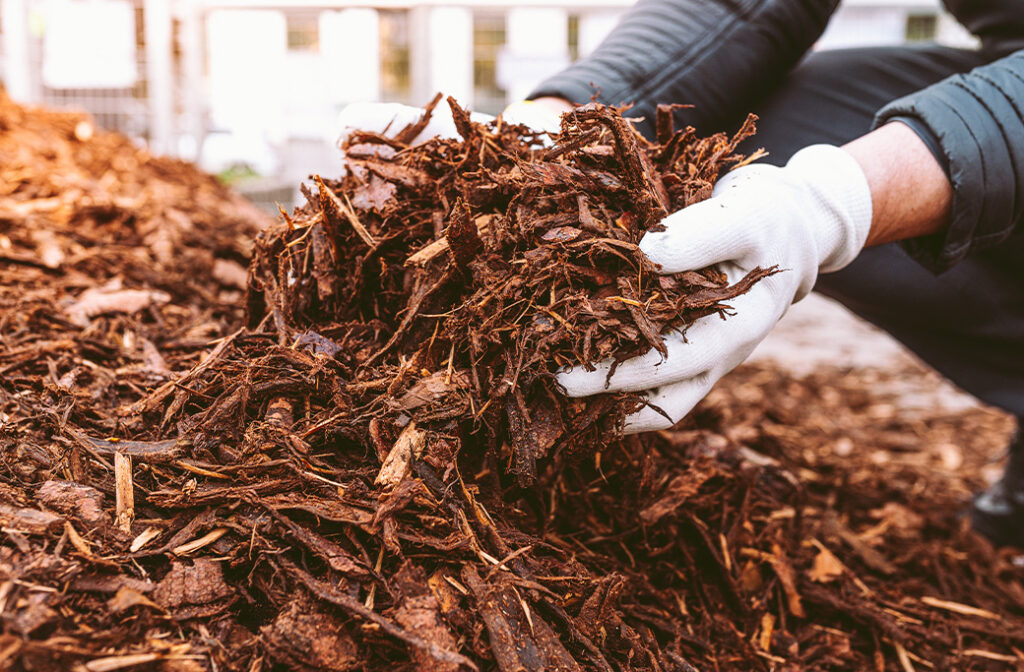
Mulch serves a functional purpose. It mimics the natural layer of decomposing organic matter that builds up around trees in a forest setting. Common materials include hardwood mulch, pine bark, wood chips, and shredded bark. As these materials break down, they add nutrients to the soil and encourage beneficial microorganisms that support root health.
The core benefits of mulching trees in late summer include:
- Moisture retention: Mulch slows evaporation from the soil surface, reducing how often you need to water. This matters most for newly planted trees, mature shade trees, and any tree showing signs of drought stress.
- Root temperature regulation: A mulch layer insulates the soil, protecting shallow roots from the intense heat that builds up during late summer afternoons.
- Weed suppression: Weeds compete directly with trees for water and nutrients. Mulch limits their growth without the need for herbicides.
- Soil improvement: Organic mulch breaks down gradually, enriching the soil and creating conditions where roots can expand more easily.
- Equipment protection: Mulch rings create a buffer zone around the trunk, reducing the risk of bark damage from lawn mowers and string trimmers—wounds that can open the door to insects and disease.
How to Mulch Around Trees Correctly
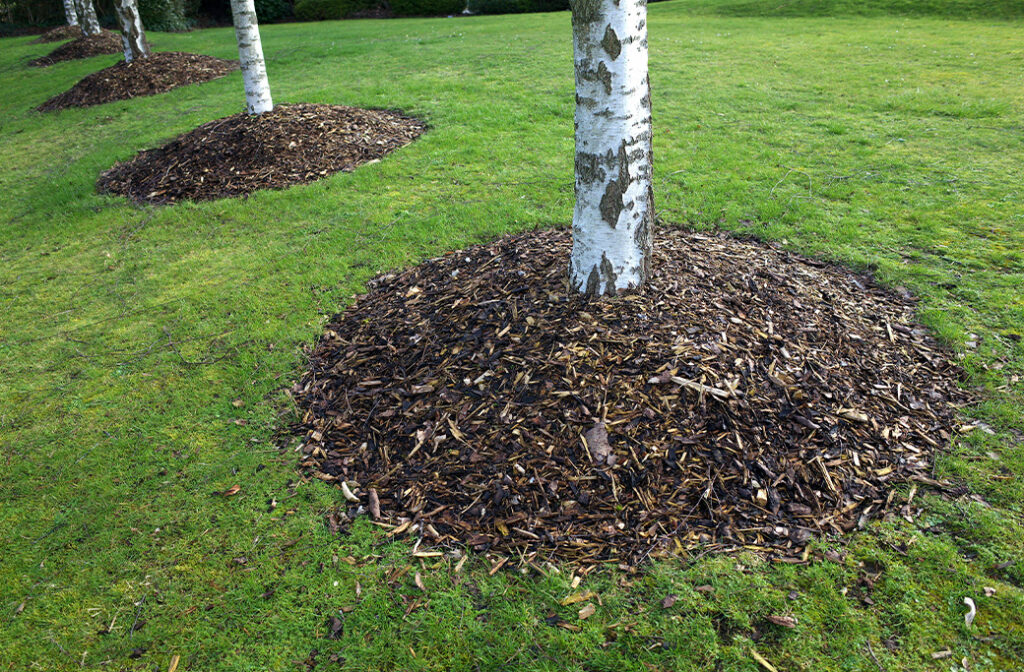
Proper technique matters. Done right, mulching is highly beneficial. Done wrong, it can cause real harm.
Apply 2–4 inches of mulch. Too little provides minimal protection. Too much traps excess moisture at the root zone and can suffocate roots.
Extend the mulch ring as wide as possible. Ideally, mulch should reach out toward the drip line of the tree (the outer edge of the canopy). A wider ring offers more protection than a small circle around the trunk.
Keep mulch away from the trunk. Piling mulch directly against the bark—sometimes called a “mulch volcano”—is one of the most common and damaging mistakes homeowners make. It traps moisture, promotes decay, attracts insects, and can lead to root girdling, where roots wrap around the trunk and restrict its growth.
Leave several inches of clear space between the mulch and the base of the trunk.
Other Late Summer Tree Care Tips
Mulching works best as part of a broader care routine. During dry periods, water trees deeply rather than frequently. This encourages roots to grow downward rather than staying shallow. Watch for early signs of drought stress, including wilting foliage, brown leaf edges, or early leaf drop.
It’s also worth inspecting trees for storm damage before fall arrives. Broken limbs and cracks in the trunk left unaddressed can become serious hazards during winter storms.
How Shannon & Sons Tree Service Can Help
Shannon & Sons Tree Service provides professional tree care throughout Winston-Salem and the surrounding Triad area. Our services include tree trimming and pruning, tree removal, storm damage cleanup, and tree health evaluations. If you’re unsure about the condition of your trees heading into fall, we’re happy to take a look.
Mulching is a small investment that pays off all year. Combined with regular inspections and timely maintenance, it’s one of the most effective ways to keep your trees healthy for years to come.
Ready to get started? Contact Shannon & Sons Tree Service at 1.336.244.2633 or schedule a free estimate online.