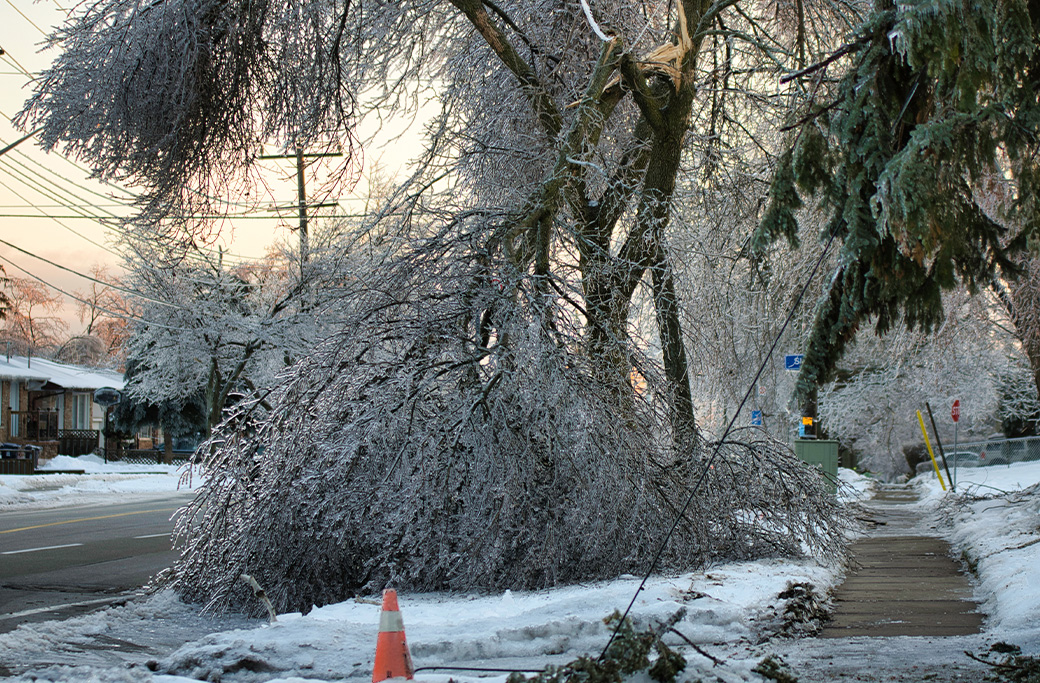
Ice storms are a stark reality in Winston-Salem and the surrounding Triad area. The beauty of a winter wonderland can quickly turn dangerous when the weight of accumulating ice becomes too much for trees to bear. When gravity wins, the results—fallen trees on homes, vehicles, and power lines—create immediate emergencies.
During the chaos of a storm, panic is a natural reaction. However, knowing exactly what to do when a tree falls can protect your family, your property, and your wallet. At Shannon & Sons Tree Service, we believe that informed homeowners make safer decisions. Here is your step-by-step guide to handling tree emergencies during an ice storm.
Immediate Safety Comes First
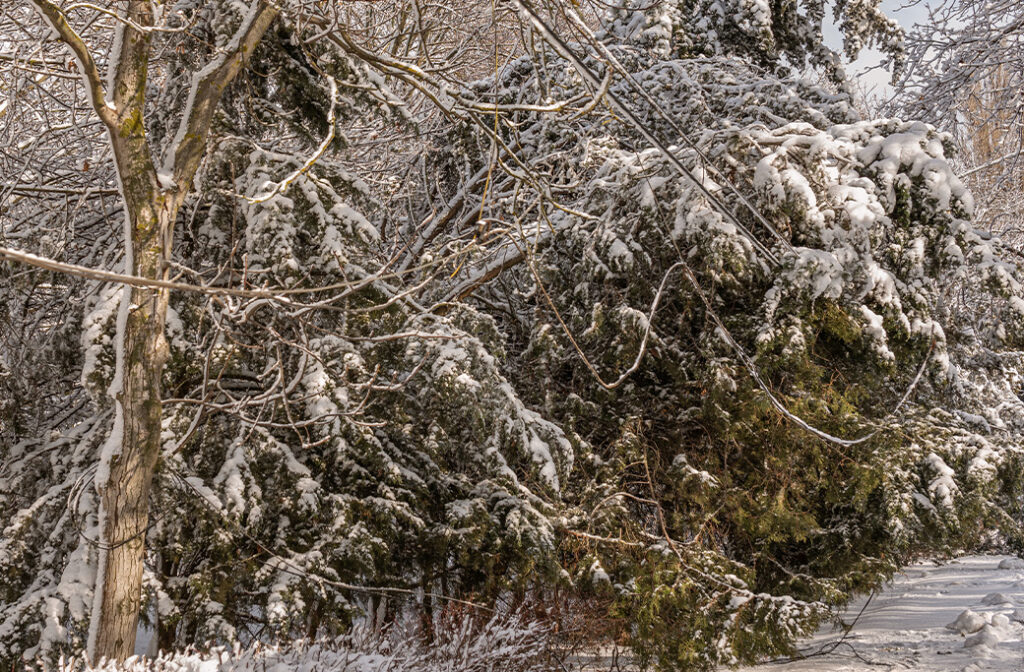
If a tree or large limb crashes down, your first instinct might be to rush outside and check the damage. Do not do this.
Ice storms often bring down power lines along with tree limbs. A downed line can be hidden underneath branches or snow, making the entire area around the tree electrified and deadly. Treat every fallen wire as if it is live.
Ensure that all family members, including children and pets, stay inside and away from the affected area. If a tree has fallen onto your home and punctured the roof or walls, evacuate that specific room or the entire house if structural stability is compromised.
Call 911 immediately if:
-
- You see sparks or flashes coming from a power line.
- Someone is injured.
- The tree is blocking a public road or trapping residents inside.
- There is a smell of gas or smoke.
Step 1: Assess the Situation From a Safe Distance
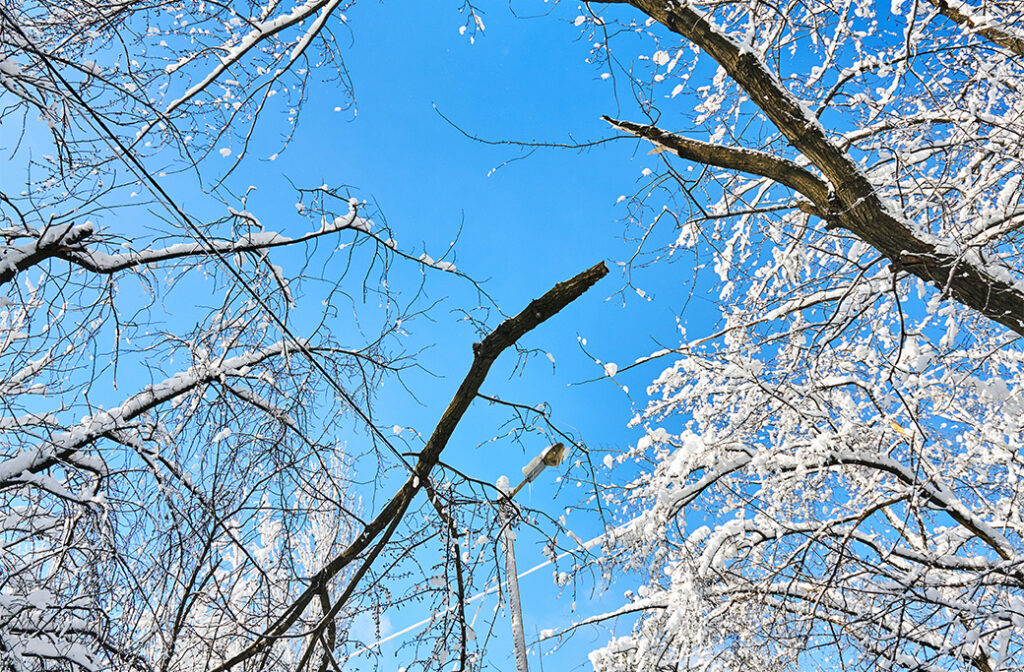
Once you have confirmed that no one is in immediate physical danger, you can begin to assess the situation. Remember to keep your distance. Look through windows or stand well back from the debris field.
You are looking for three key things:
-
- The state of the tree: Is it fully on the ground, or is it leaning against another tree or structure (a “widowmaker”)? Leaning trees are under immense tension and can snap without warning.
- Structural damage: Look for obvious signs of impact on your roof, siding, windows, or vehicles.
- Root plate instability: Sometimes the tree hasn’t snapped but has uprooted. A lifted root ball is incredibly unstable, especially in sodden, icy soil.
Note: Never attempt to climb on a roof covered in ice to inspect damage. The risk of slipping is extreme.
Step 2: Document the Damage
Before any cleanup begins, you need proof for your insurance provider. As soon as it is safe to do so (and from a safe distance), take clear photos and videos.
Capture multiple angles of:
-
- The fallen tree or limb.
- Damage to your home, garage, shed, or fence.
- Damage to vehicles.
- The general condition of the yard (showing ice accumulation).
This documentation is vital for your claim. Insurance adjusters need to see the “before” state to process claims regarding removal costs and structural repairs.
Step 3: Do NOT Attempt DIY Removal
We cannot stress this enough: Chainsaws and ice storms are a dangerous combination.
Cutting wood under tension—like a bent branch loaded with ice—is unpredictable. When you make a cut, the limb can snap back with tremendous force, leading to severe injury. Furthermore, operating a chainsaw on slippery, icy ground increases the risk of losing your footing and control of the saw.
If a tree is near a power line, there’s a serious risk of getting shocked. Even if a power line appears to be off, it can suddenly turn back on. It’s best to let professionals, who are trained and have the right safety equipment, handle this dangerous situation.
Step 4: Know When to Call Professionals
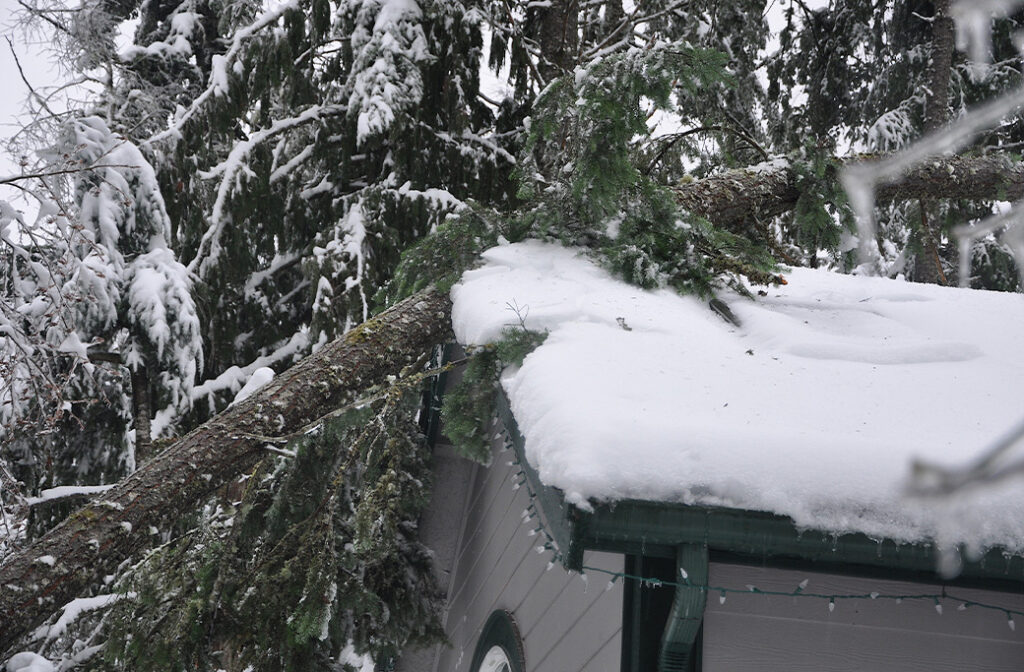
While small branches can be cleaned up later, certain situations require immediate professional intervention. Call a certified tree service if:
-
- Access is blocked: You cannot leave your driveway in case of a medical emergency.
- Structure is compromised: The tree is resting on your house, creating a load that could cause a roof collapse.
- Utilities are involved: The tree is tangled in service lines (contact your utility provider first to cut power, then the tree service).
- Tension risks: Large trees are bent or leaning precariously.
How Shannon & Sons Responds
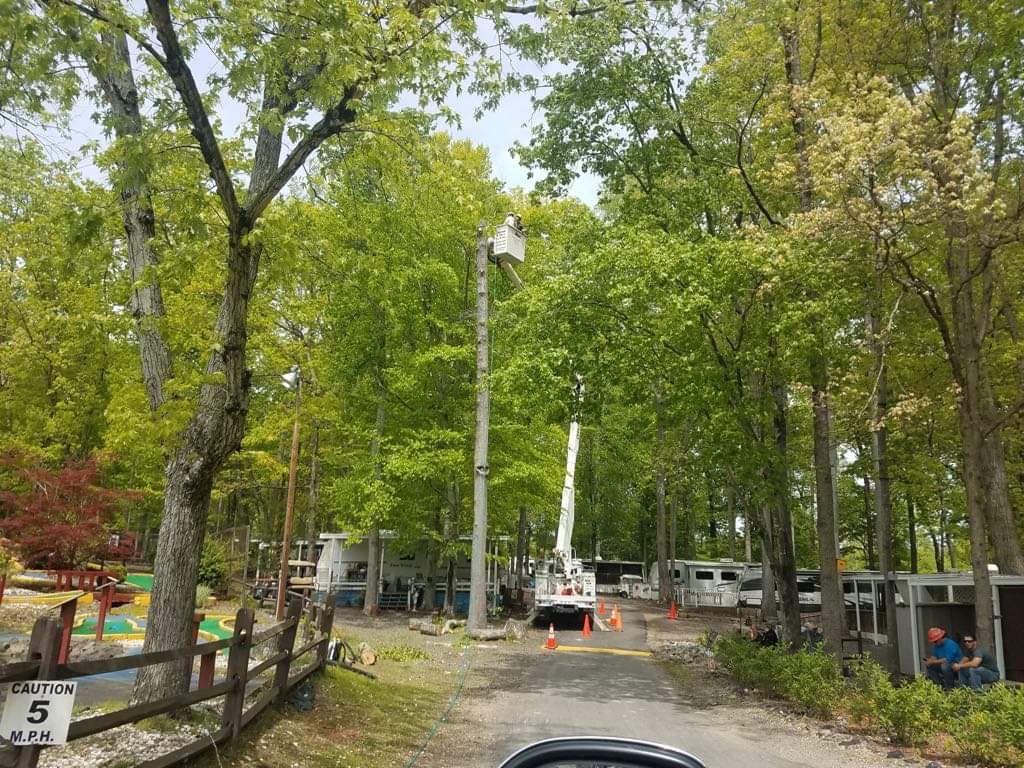
When you call us during an ice storm, we activate our emergency response protocols. We utilize specialized equipment designed for storm conditions to safely dismantle trees piece by piece, preventing further damage to your property. We also coordinate with you and your insurance provider to ensure the process is smooth and documented.
Step 5: Temporary Safety Measures While You Wait
While waiting for the utility company or our crew to arrive, you can take passive measures to secure the area:
-
- Barricade the zone: Use caution tape, cones, or even lawn chairs to visually mark the danger zone so neighbors or delivery drivers don’t walk near it.
- Prevent water damage: If a limb has punctured the roof, and it is safe to do so from the inside, place buckets to catch melting ice or water ingress. Do not climb on the roof to tarp it during the storm.
After the Emergency: Preventing Future Ice Storm Damage
Once the ice melts and the immediate danger is cleared, it’s time to think about the next storm. Prevention is always cheaper and safer than emergency removal.
Scheduling a professional tree inspection can identify “weak links” in your landscape. We look for V-shaped crotches (which split easily under ice load), dead wood, and signs of decay. Strategic pruning can reduce the surface area where ice accumulates, helping your trees survive the next winter freeze intact.
Why Choose Shannon & Sons Tree Service
When disaster strikes, you need a local team that understands the unique weather patterns of Winston-Salem. Shannon & Sons Tree Service has been serving this community for over 20 years. We are fully licensed and insured, meaning you are protected while we work.
We don’t chase storms; we live here. Our goal is to get your property safe and clear as quickly as possible with honest recommendations and transparent pricing.
What to Do When a Tree Falls During an Ice Storm
Don’t wait for the next forecast of freezing rain to think about the trees looming over your roof. Save our number in your phone today so you aren’t scrambling when the power goes out.
Call Shannon & Sons Tree Service at 1-336-244-2633 for emergency response or to schedule a preventative inspection.