
Updated October 22, 2026
A broken tree branch can be more than an eyesore. Whether a limb snapped during a thunderstorm, cracked under the weight of ice, or broke unexpectedly on a calm day, knowing what to do next can help protect your property and the tree itself.
What should you do if a tree branch breaks? First, check for hazards from a safe distance. Keep people and pets away from hanging, cracked, or partially attached branches. Never attempt to remove a large or unstable limb yourself. If the branch is touching or near electrical lines, stay clear and contact your utility provider.
At Shannon & Sons Tree Service, we help homeowners throughout Winston-Salem, Clemmons, Lewisville, and surrounding Piedmont Triad communities address damaged trees through professional pruning, storm-damage cleanup, and tree removal when necessary.
Is a Broken Tree Branch Dangerous?

A fallen branch may be a sign of additional damage higher in the tree.
A broken branch can be dangerous if it is hanging, partially attached, unusually large, or positioned where it could fall on people or property. Even a branch that appears stable may shift without warning.
Watch for these warning signs:
-
- Hanging limbs: Broken branches suspended in the canopy can fall unexpectedly.
- Partially attached branches: Splintered wood may not support the remaining weight.
- Trunk splits: Cracks extending into the trunk can indicate significant structural damage.
- Branches over structures: A damaged limb above a roof, fence, vehicle, or driveway presents additional concerns.
- Root movement: Newly lifted soil or a tree that begins leaning may signal instability.
- Electrical hazards: Any branch touching or approaching power lines requires utility-company guidance.
A small twig on the lawn is very different from a heavy limb suspended above your driveway.
How Serious Is the Damage?
| Broken Branch Situation | Level of Concern | Recommended Next Step |
|---|---|---|
| Small twig on the ground | Generally low | Remove when the area is safe |
| Small damaged branch within easy reach | Depends on conditions | Consider appropriate pruning only if safely accessible |
| Large hanging or partially attached limb | High | Keep clear and arrange professional evaluation |
| Heavy branch resting on a roof | High | Stay away; contact a qualified tree professional |
| Branch contacting power lines | Critical | Keep clear and contact the utility provider |
| Broken limb with a trunk split or shifting roots | High | Keep clear and seek prompt professional assessment |
This table provides general guidance, not an individual tree-risk assessment.
Can a Broken Tree Branch Heal Itself?
A broken branch cannot reattach and heal like a broken bone, but the tree may recover from the injury.
Trees respond to damage by forming protective boundaries around injured wood, a process called compartmentalization. Over time, new growth may develop around the wound. However, a severely broken branch generally cannot be restored by wrapping it with tape, rope, or household materials.
Whether the tree recovers depends on the severity of the injury, its overall health, and the amount of living canopy lost. A healthy tree that loses one smaller branch may recover well. A mature tree with a major trunk split or extensive structural damage requires closer evaluation.
Should You Cut Off a Broken Tree Branch?

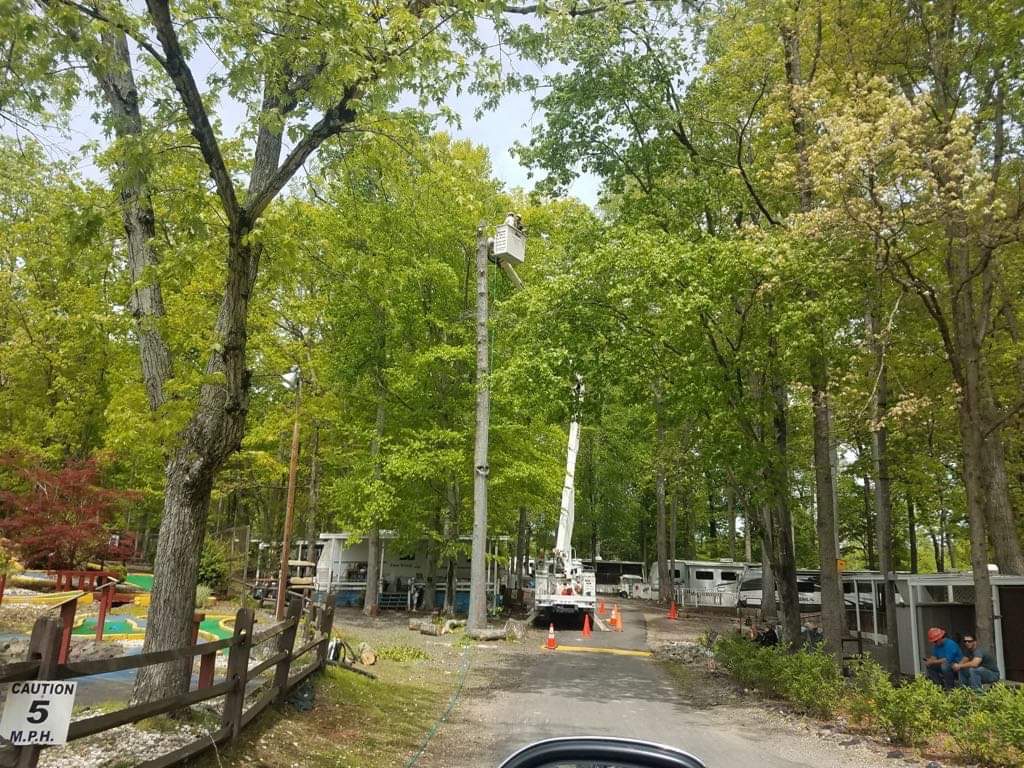
Professional pruning can remove damaged wood while protecting the remaining tree.
Minor branch damage may be suitable for careful pruning, but large, hanging, or unstable limbs should be handled by professionals.
Before attempting any work, consider the branch’s size, position, and surrounding hazards.
Avoid do-it-yourself removal when the work involves:
-
- A ladder or climbing
- Chainsaws or overhead cutting
- Branches above shoulder height
- Large, heavy, or suspended limbs
- Wood that is bent or under tension
- A leaning or structurally damaged tree
- Nearby electrical lines
Branches under tension can move suddenly when cut. A hanging limb may also be supporting another damaged section of the tree. If you cannot safely reach a small branch while standing on stable ground, leave the work to a qualified professional.
How Should Broken Tree Branches Be Pruned?
Proper pruning removes damaged wood while protecting the healthy portions of the tree. The objective is not simply to make the broken area look neat.
Professional pruning generally follows several important principles.
Preserve the Branch Collar
The branch collar is the slightly enlarged area where a branch connects to the trunk or a larger limb. When removing an entire branch, proper cuts generally preserve this tissue because it helps the tree respond to the wound. Cutting flush against the trunk can damage healthy tissue and create a larger wound than necessary.
Avoid Removing Unnecessary Healthy Growth
A tree that has already lost part of its canopy does not necessarily benefit from additional heavy pruning. Removing too much living foliage can reduce the tree’s ability to produce energy, particularly during stressful weather conditions.
Never Top a Tree to Correct Branch Damage
Tree topping removes major portions of a tree’s canopy without following proper pruning principles. It can encourage weakly attached regrowth and create additional long-term structural problems.
Skip Routine Wound Paint
Tree wounds generally do not need paint, tar, or household sealants. These products do not restore the broken branch and can interfere with natural wound responses.
For more information about preventive maintenance, explore our tree pruning and trimming services.
What If a Tree Branch Breaks During a Storm?
North Carolina thunderstorms, heavy winds, and winter ice can leave trees with damaged branches even when the rest of the tree appears healthy.
After a storm, prioritize safety before cleanup.
-
- Keep children, pets, and vehicles away from the damaged area.
- Look for downed electrical lines or branches contacting utility equipment without approaching them.
- Photograph visible property damage from a safe location.
- Contact emergency services for an immediate threat to life, or the utility provider for electrical hazards.
- Notify your insurance provider if a branch damaged your home, vehicle, or another insured structure.
- Arrange a professional assessment of hanging limbs, trunk cracks, or other structural concerns.
Never pull a hanging branch down with a rope or vehicle. Avoid climbing into a damaged tree, even if the storm has passed.
Our storm-damage tree services can help homeowners determine the appropriate next steps for damaged trees.
Can a Tree Survive After Losing a Large Branch?
Yes, some trees survive losing a major limb, but recovery depends on how much damage occurred and whether the remaining structure is sound.
Several factors influence the outcome:
-
- Tree species: Different trees vary in their ability to tolerate damage.
- Existing health: Trees already weakened by disease, drought, or decay may recover less successfully.
- Canopy loss: Losing a substantial portion of the living crown can reduce energy production.
- Wound location: A broken branch that tears into the trunk can cause more serious damage than a cleanly separated limb.
- Structural integrity: Remaining limbs and trunk sections must be able to support the tree.
- Root condition: Damaged or unstable roots can increase the risk of failure.
Some damaged trees can be preserved through corrective pruning and ongoing care. Others may need more extensive intervention.
When Does a Broken Branch Mean the Tree Needs Removal?
A broken branch does not automatically mean the entire tree needs to come down.
However, removal may be appropriate when damage compromises the tree’s stability or creates risks that cannot reasonably be reduced through pruning.
Conditions that warrant professional assessment include:
-
- A major split running into the trunk
- Severe decay around a large branch attachment
- Extensive loss of the tree’s crown
- Multiple damaged structural limbs
- Significant root damage or movement
- A newly leaning tree
- Structural damage threatening an occupied building
A professional evaluation can help determine whether selective pruning, continued monitoring, or tree removal is the most appropriate solution.
When Should You Call a Professional Tree Service?
If a broken limb is large, suspended, close to your home, or attached to a tree showing structural damage, professional evaluation is the safer choice.
At Shannon & Sons Tree Service, we work with homeowners throughout Winston-Salem, Clemmons, Lewisville, Forsyth County, and surrounding Triad communities.
Whether you are concerned about a hanging branch, storm-damaged tree, or potentially hazardous limb, we can help evaluate the situation and recommend appropriate tree care.
Our goal is to address the immediate concern while considering the long-term health and safety of the remaining tree.
Don’t let a broken branch become a bigger problem.
Request a Free Tree Service Estimate or call 336-244-2633 to discuss your tree-care needs.