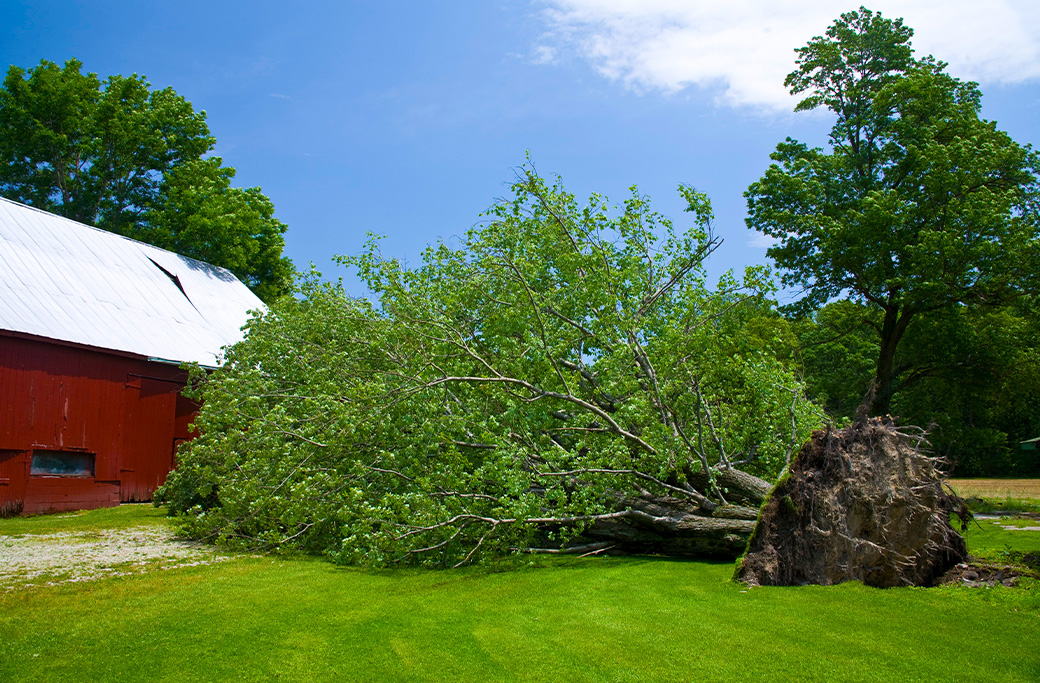
Quick Answer: Yes, a healthy tree can fall during a summer storm. While dead or diseased trees are more likely to fail, even trees that appear healthy can fall if they’re exposed to strong winds, saturated soil, hidden structural defects, or damaged root systems.
The good news is that many storm-related tree failures can be prevented with regular inspections and proactive tree care.
After a severe summer storm, it’s not uncommon to see large, seemingly healthy trees lying across roads, homes, or power lines. Many homeowners are surprised because the tree looked perfectly fine just days before.
The reality is that appearances can be deceiving. Trees may have hidden weaknesses below the ground or inside the trunk that aren’t visible from the outside. Add heavy rain, strong winds, and saturated soil, and even a healthy-looking tree can become unstable.
At Shannon & Sons Tree Service, we’ve helped homeowners throughout Winston-Salem and the Triad prepare for storm season by identifying potential hazards before they become emergencies.
Why Do Trees Fall During Summer Storms?
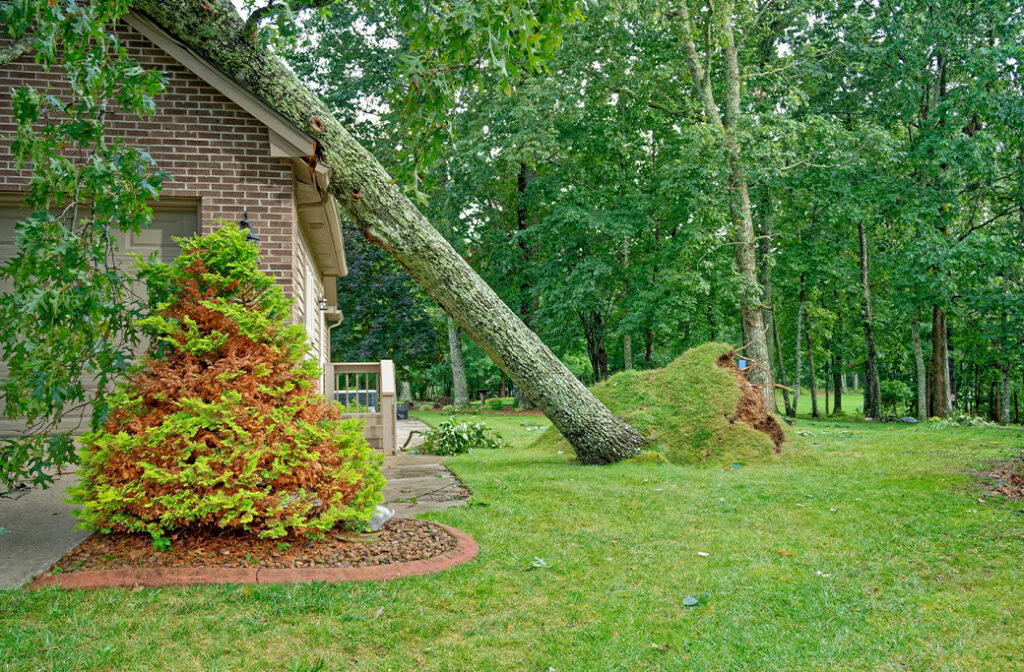
Several factors can contribute to tree failure during severe weather.
Saturated Soil Weakens Root Support
Heavy rain softens the soil surrounding a tree’s roots. When the ground becomes saturated, roots lose some of their ability to anchor the tree securely. Combined with high winds, this can cause an entire tree to uproot.
Warning Signs
-
-
- Soil lifting around the base
- Newly leaning tree
- Exposed roots
- Standing water around the tree
-
Strong Winds Create Extreme Pressure
Wind doesn’t just push against a tree. It creates enormous force throughout the canopy. Large trees with dense crowns catch more wind, increasing stress on branches, trunks, and root systems. This is known as wind loading. Even healthy trees can fail if wind speeds are high enough.
Hidden Decay
One of the biggest dangers is decay you can’t see. A tree may appear healthy on the outside while internal rot weakens the trunk or major limbs.
Signs may include:
-
-
- Hollow areas
- Mushrooms growing near the base
- Cavities
- Cracks in the trunk
- Dead branches high in the canopy
-
Professional inspections can often detect these hidden problems before storms arrive.
Root Problems
Healthy roots are essential for tree stability.
Unfortunately, roots can be damaged by:
-
-
- Construction
- Soil compaction
- Poor drainage
- Disease
- Previous storm damage
-
Since most roots are underground, homeowners often don’t realize there’s a problem until the tree begins leaning, or falls.
Weak Branch Attachments
Not every branch grows with a strong connection to the trunk. Branches with narrow, V-shaped unions or included bark are naturally weaker and may split apart during heavy winds. Removing hazardous limbs before storm season can significantly reduce the risk of damage.
What Makes a Tree Dangerous?
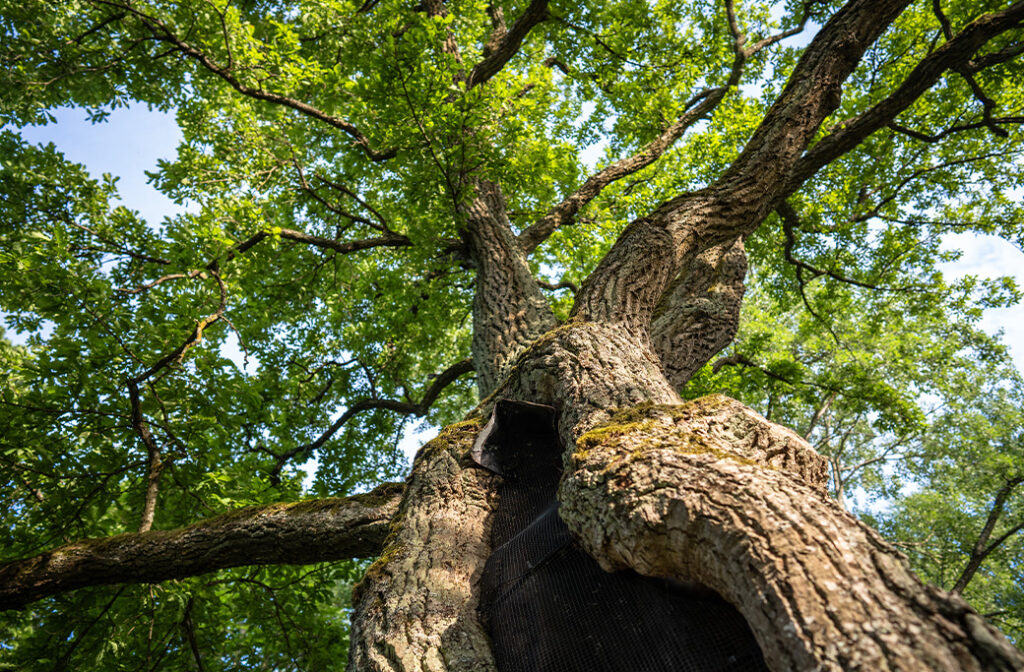
Not every tree poses the same level of risk.
A tree becomes more hazardous when it has one or more of the following:
-
- Large dead branches
- Cracks or splits in the trunk
- Hollow cavities
- Leaning after a storm
- Root damage
- Mushrooms or fungal growth near the base
- Multiple trunks with weak attachments
- Branches hanging over homes, driveways, or power lines
Even healthy trees become more dangerous if they’re located close to structures or areas where people regularly gather.
Can a Healthy-Looking Tree Have Hidden Problems?
Absolutely. Many structural defects develop inside a tree long before visible symptoms appear.
For example:
-
- Internal decay can hollow out a trunk.
- Roots may be rotting underground.
- Previous storm damage may have weakened major limbs.
- Insect activity can compromise structural integrity.
That’s why visual appearance alone isn’t always enough to judge whether a tree is safe.
How to Reduce the Risk of Tree Failure
Fortunately, there are several ways homeowners can help protect their property before severe weather arrives.
Schedule Regular Tree Inspections
Professional inspections identify problems that are easy to overlook.
An experienced tree care professional can evaluate:
-
-
- Structural stability
- Deadwood
- Root health
- Canopy balance
- Signs of disease
- Hidden hazards
-
Remove Dead or Weak Limbs
Strategic pruning helps reduce the weight and wind resistance of the canopy while removing hazardous branches. Proper pruning also improves airflow, making trees more resilient during storms.
Monitor Trees After Heavy Rain
Pay attention to changes following periods of excessive rainfall.
Watch for:
-
-
- Leaning
- Soil movement
- Newly exposed roots
- Cracks in the ground around the tree
-
These can indicate the root system has begun to fail.
Keep Trees Healthy Year-Round
Healthy trees are generally better equipped to withstand storms. Regular watering during drought, proper mulching, and preventative maintenance all contribute to stronger root systems and healthier growth.
When Should You Have a Tree Inspected?
It’s a good idea to schedule a professional inspection if:
-
- Your tree is large and close to your home.
- It has never been professionally evaluated.
- You notice dead branches or cracks.
- The tree begins leaning.
- Heavy storms recently passed through your area.
- The tree is mature or shows signs of decline.
Storm season is much easier to prepare for than recover from.
How Shannon & Sons Tree Service Can Help
At Shannon & Sons Tree Service, we help homeowners throughout Winston-Salem and the Triad identify potential hazards before severe weather strikes.
Our services include:
-
- Professional tree inspections
- Tree trimming and pruning
- Hazardous limb removal
- Tree removal
- Storm damage cleanup
- Emergency tree services
Whether you have concerns about one tree or your entire property, our experienced team can recommend the safest and most effective solution.
Can a Healthy Tree Fall During a Summer Storm?
While healthy trees are naturally resilient, even a healthy tree can fall during a summer storm under the right conditions.
Heavy rain, saturated soil, hidden decay, wind loading, and root damage all increase the risk of failure. The best way to protect your home and family is to identify potential hazards before the next storm arrives.
If you have concerns about the trees on your property, contact Shannon & Sons Tree Service for a professional inspection and enjoy greater peace of mind all storm season long.