Who Is Responsible for Tree Branches Over a Property Line in North Carolina?
A tree may be growing in your neighbor’s yard, but its branches don’t always stay there. When limbs stretch across a fence, hang over your roof, or begin looking unsafe, figuring out who is responsible can get confusing quickly.
In North Carolina, what you can do generally depends on where the tree is located, what is crossing the property line, the condition of the tree, and what work you plan to perform. Homeowners may have options for addressing branches that extend onto their property, but that does not mean every branch should simply be cut straight back to the boundary.
There is also an important distinction between a tree-care question and a legal or insurance question. A tree professional can evaluate the condition of a tree, identify hazardous limbs, and recommend appropriate pruning or removal. Questions involving ownership, liability, insurance coverage, or a disputed property boundary may require an attorney, insurance provider, surveyor, HOA, municipality, or utility company.
This article provides general tree-care information and is not legal advice.
Who Is Responsible for Tree Branches Over a Property Line in North Carolina?
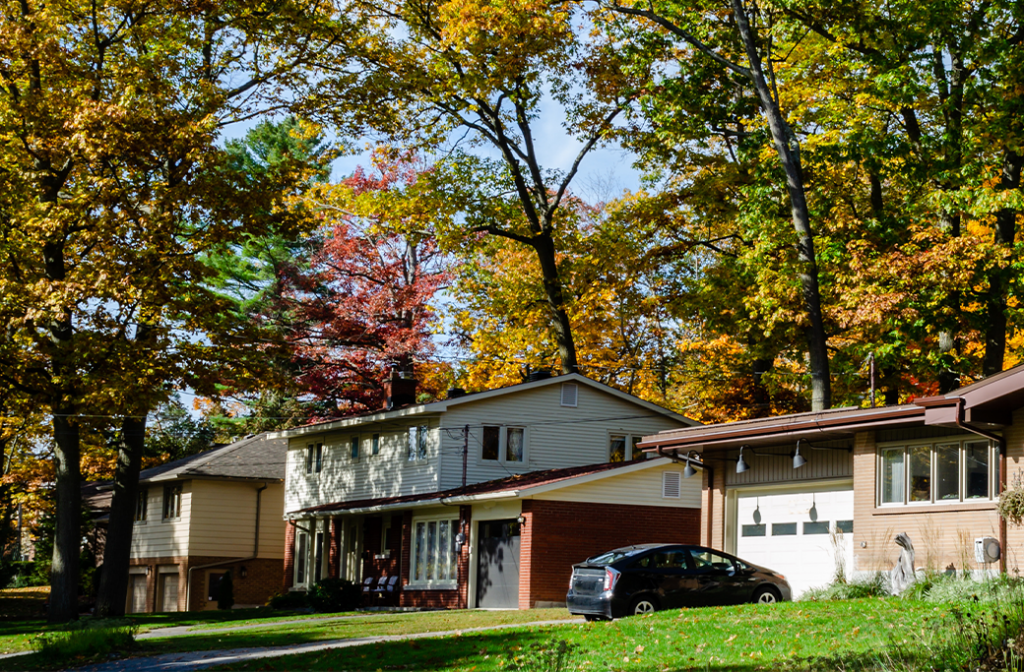
Generally, if a tree is rooted on a neighbor’s property, but branches extend over your property, you may have options to address the portion affecting your property. However, you should not enter the neighbor’s property without permission or perform pruning that unnecessarily damages or destabilizes the tree.
North Carolina law can impose substantial damages when someone enters another person’s land without permission, and injures, cuts, or removes a tree. That makes it especially important to know where the property line actually is before significant tree work begins.
If the issue involves a large limb, a mature tree, an uncertain boundary, or pruning that could affect the tree’s health or stability, getting professional guidance before cutting is the safer approach.
Can I Cut My Neighbor’s Tree Branches That Hang Over My Property?
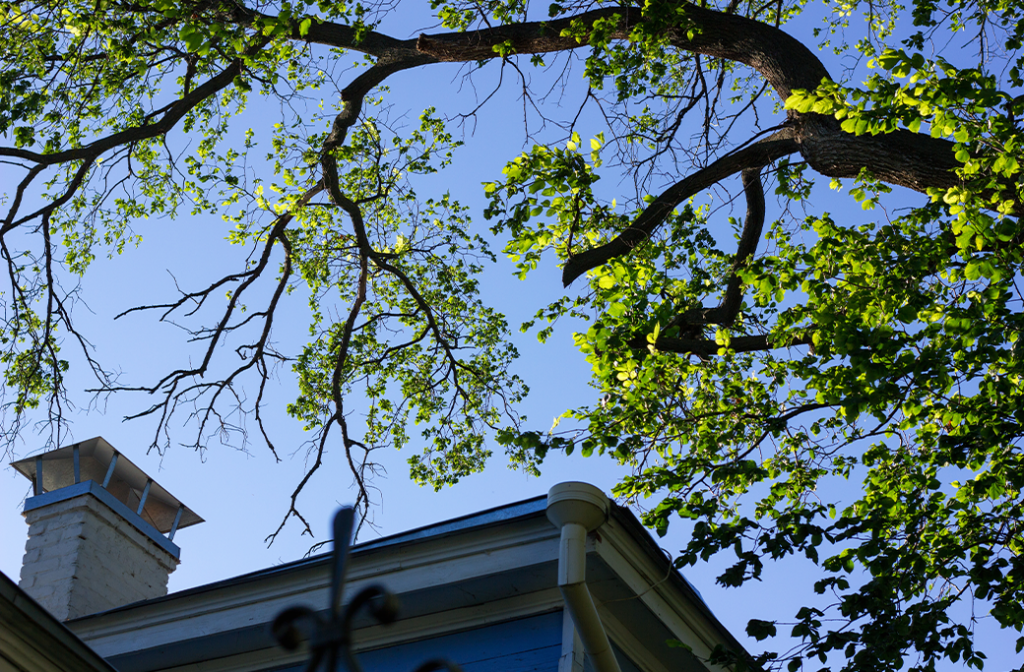
Overhanging branches do not automatically give you ownership of the entire tree.
If branches extend into the space above your property, you may generally be able to address the encroachment from your side. However, avoid:
-
- Entering your neighbor’s property without permission
- Cutting portions of the tree located beyond your property
- Removing so much live growth that the tree becomes unstable
- Making improper cuts that seriously damage the tree
- Attempting large or hazardous pruning without the proper equipment or experience
North Carolina law specifically provides remedies when someone enters another person’s land without permission and injures or removes trees or other valuable vegetation.
Even when pruning is permitted, where you are legally allowed to cut and where a tree should biologically be pruned are not necessarily the same thing. Proper pruning cuts are based on branch structure and tree health, not simply an imaginary vertical line running upward from a fence.
For large limbs, professional tree pruning can help resolve the encroachment without creating a new safety or tree-health problem.
Who Pays to Trim Overhanging Tree Branches?
There is not one answer that applies to every situation.
Routine branches growing from a healthy neighboring tree are different from a tree that is dead, severely decayed, structurally compromised, or otherwise known to present a hazard.
The circumstances also matter when determining whether a property owner could potentially be responsible for damage. In the North Carolina case Rowe v. McGee, for example, allegations concerning a visibly rotten tree and prior notice of its dangerous condition were important to the negligence issue.
That does not mean every questionable-looking tree automatically makes its owner responsible for trimming or future damage.
If the disagreement is primarily about who must pay, who is legally responsible, or whether negligence exists, speak with the appropriate insurance professional or attorney. A tree-care company can evaluate the condition of the tree, but it should not determine legal liability.
Can You Cut Branches Back to the Property Line?
Possibly, but don’t assume the best pruning method is to create a perfectly vertical wall at the boundary.
Proper pruning considers:
-
- Branch size
- Branch attachment
- Tree species
- Canopy balance
- Structural stability
- The amount of live growth being removed
- Where an appropriate pruning cut can actually be made
Removing a major portion of one side of a mature tree can potentially stress the tree or change its structural balance. That is why a large oak limb hanging over a Winston-Salem driveway is a very different project from clipping a few small branches extending across a fence. If substantial pruning is necessary, have the tree evaluated before cutting.
What If My Neighbor’s Tree Looks Dangerous?
This is when the conversation changes from routine maintenance to potential tree risk.
Warning signs worth taking seriously include:
-
- Large dead or hanging branches
- Cracks or splits in major limbs or the trunk
- Significant new leaning
- Exposed, damaged, or lifting roots
- Decay or cavities
- Recent storm damage
- Partial uprooting
- Large dead areas in the canopy
A concerning tree does not automatically mean that it will fall, or establish who would legally be responsible if it did.
A professional tree evaluation can help identify observable health and structural concerns and determine whether pruning, monitoring, cabling or bracing, or removal should be considered.
If you’re concerned about a tree on someone else’s property, documenting the condition and communicating calmly with the property owner can also be useful. Questions about legal notice or potential liability should be discussed with an attorney, rather than relying on a tree company for legal advice.
Who Is Responsible If a Neighbor’s Tree Falls on My Property?
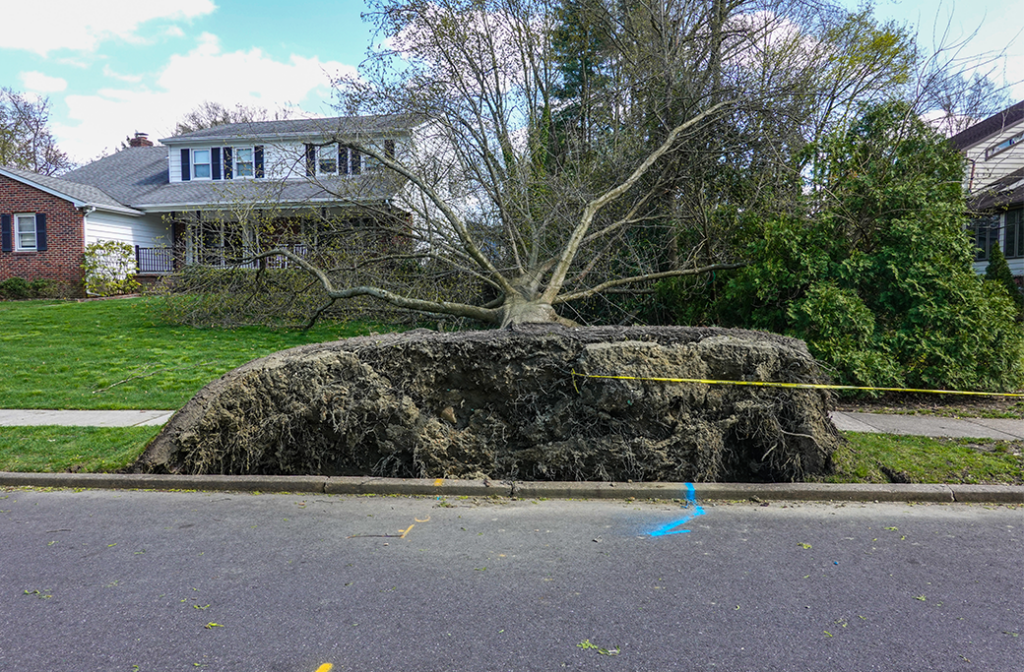
The answer depends heavily on the circumstances.
A healthy tree unexpectedly brought down by severe weather presents a different situation from a visibly deteriorated tree that posed a known hazard before it failed.
North Carolina courts have considered whether a property owner knew or reasonably should have known that a tree posed a dangerous condition when evaluating negligence involving a fallen tree.
Tree condition is only one part of the issue. Insurance policies, prior notice, the facts surrounding the failure, and other circumstances may affect responsibility.
If a neighboring tree damages your home, vehicle, fence, or other property:
-
- Stay clear of unstable trees and hanging limbs.
- Photograph the damage when it is safe to do so.
- Contact your insurance provider.
- Arrange for professional tree work if the tree or limbs remain hazardous.
- Seek legal advice if responsibility is disputed.
After storms, do not approach trees or branches touching electrical lines.
What Happens If Trimming Damages the Neighbor’s Tree?
This is one of the strongest reasons not to treat the property line as permission to make aggressive cuts. North Carolina law provides for damages when a person enters another’s property without permission, and injures or removes trees. Even apart from that statute, damaging a valuable mature tree can create an expensive dispute.
Before removing a major limb, or a significant percentage of a tree’s canopy, consider whether the proposed work could:
-
- Destabilize the tree
- Create large wounds
- Remove too much live canopy
- Increase the chance of branch failure
- Permanently disfigure the tree
- Contribute to decline
Professional pruning is particularly valuable when a large limb crosses a property line, but the tree itself should be preserved.
Can I Remove a Tree That Sits Directly on the Property Line?
Treat this situation cautiously.
First, make sure the tree actually sits on the legal boundary. A fence, mowing line, landscaping bed, or assumption about where one yard ends does not necessarily establish a legal property line.
NC State Extension recommends a professional survey when there is doubt about a property’s boundary.
A tree whose trunk intersects a boundary also presents a more complicated situation than a tree clearly located entirely on one parcel. Before removing or substantially altering a true boundary-line tree, homeowners should verify the property line and obtain appropriate legal guidance if ownership or permission is unclear.
Don’t authorize removal based solely on a guess about where the property line runs.
Can I Cut Tree Roots That Cross Onto My Property?
Roots deserve the same caution as large branches.
Cutting major structural roots can destabilize a tree and increase its risk of falling. Other root damage can contribute to decline that may not become obvious immediately.
If roots are damaging a driveway, walkway, retaining wall, or other structure, have the situation evaluated before cutting substantial roots.
The solution may depend on the tree species, root size and location, condition of the tree, and the structure being affected.
What If the Tree Is Near Power Lines?
Do not attempt to prune a tree or branch that is touching or dangerously close to energized power lines.
Duke Energy advises customers not to trim trees near power lines and says this work should be performed by trained professionals. Downed or sagging lines, and trees or limbs touching them, should be treated as energized and dangerous.
Contact the electric utility when vegetation is interfering with utility lines. If a line is down, stay away and report the emergency.
Property ownership does not override electrical safety.
What If There Is an HOA, Easement, or Local Tree Rule?
Property-line rights are not the only rules that may affect tree work.
NC State Extension recommends checking with local officials before pruning or removing trees when they may be regulated by:
-
- Local tree ordinances
- Easements or covenants
- HOA requirements
- Riparian or stream-buffer protections
- Historic, champion, specimen, or otherwise protected-tree provisions
In Winston-Salem, the City’s Urban Forestry program maintains trees on City property and rights-of-way and enforces applicable tree ordinances. Private-property owners remain responsible for caring for trees on their own property, subject to applicable regulations.
If you’re unsure whether a tree is within a right-of-way or otherwise regulated, check before scheduling removal.
Property-Line Tree Problems We See Around Winston-Salem
Mature trees are one of the things that make established Piedmont Triad neighborhoods attractive, but large canopies rarely follow property boundaries neatly.
Common situations include:
-
- Oak limbs extending over neighboring roofs
- Trees growing beside fences
- Branches hanging over driveways and parked vehicles
- Mature canopies spanning several yards
- Storm-damaged limbs crossing property lines
- Trees growing close to homes or other structures
- Roots affecting hardscaping
- Neighbors who disagree about whether a tree is hazardous
In many cases, the first useful question isn’t “Whose fault is this?”
It’s “What condition is the tree actually in, and what can be done safely?”
A professional evaluation can answer that tree-care question without turning a manageable maintenance issue into an unnecessary dispute.
When Should You Call a Tree Professional?
Consider professional help when:
-
- A large limb crosses the property line
- Pruning could significantly alter the canopy
- The tree appears dead, declining, cracked, decayed, or unstable
- A limb is hanging over a house, driveway, fence, or other structure
- Storm damage has affected the tree
- Large roots may need to be cut
- You’re unsure whether pruning will harm the tree
- Tree removal may be necessary
A tree professional can assess the tree and the work required.
A tree professional should not be expected to determine your legal property boundary, decide who is legally at fault, interpret your homeowners insurance policy, or resolve an ownership dispute.
Concerned About a Property-Line Tree? Shannon & Sons Can Evaluate the Tree
If you’re dealing with an overhanging limb, storm-damaged tree, or a tree near your property line, Shannon & Sons Tree Service can help determine what is happening with the tree itself.
We can evaluate its condition, discuss appropriate pruning, identify concerning limbs, and determine whether tree removal or other tree-care work may be appropriate.
If your question is “Is this tree or limb unsafe?”, that’s where professional tree expertise can help.
If your question is “Who is legally responsible?”, an attorney, insurance provider, surveyor, HOA, municipality, or utility may be the appropriate resource.
Contact Shannon & Sons Tree Service to request an evaluation or free estimate for tree pruning, hazardous-tree concerns, storm damage, or tree removal in Winston-Salem and surrounding Piedmont Triad communities.