If you’ve noticed tree leaves turning brown in summer, you’re not alone. Every July and August, homeowners throughout Winston-Salem and the Triad begin to wonder if the heat is simply taking its toll, or if something more serious is happening.
While a few brown leaves are often normal during periods of hot, dry weather, widespread browning, scorched leaf edges, or premature leaf drop can signal an underlying problem. From drought stress and insect infestations to disease and root damage, identifying the cause early can help prevent long-term damage to your tree.
At Shannon & Sons Tree Service, we help homeowners diagnose tree health issues and recommend the right solution before minor problems become major ones.
Why Are My Tree Leaves Turning Brown in Summer?
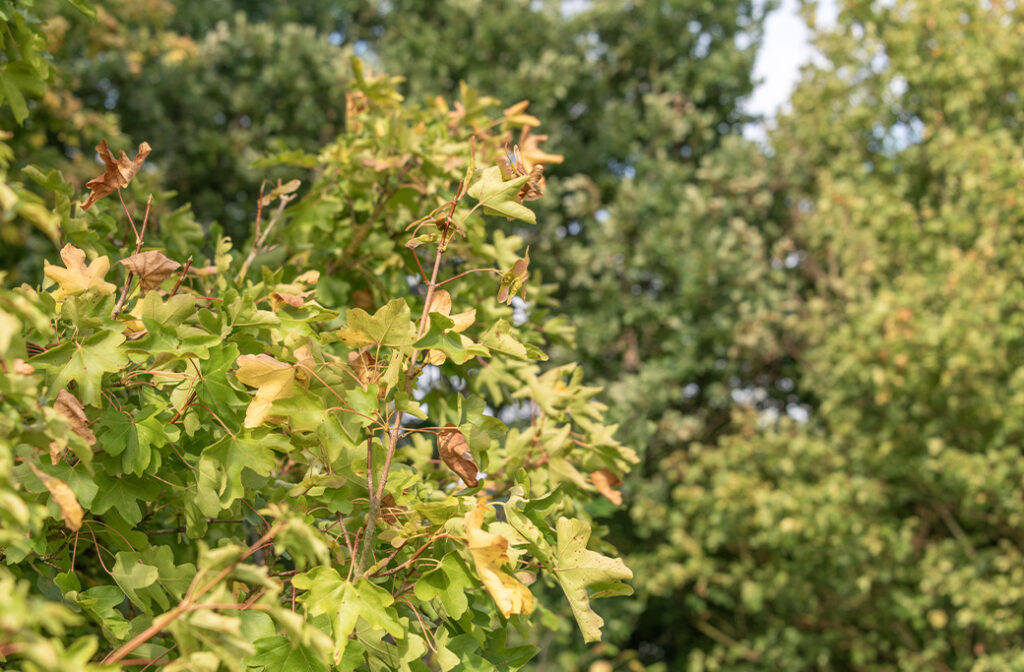
Several factors can cause brown leaves on a tree during the summer months. Some are relatively harmless, while others require immediate attention.
1. Drought Stress
One of the most common reasons leaves turn brown in summer is tree drought stress. When temperatures rise and rainfall decreases, trees struggle to absorb enough water to support healthy growth. As a result, they begin conserving moisture by allowing leaves to dry out or fall prematurely.
Signs of Drought Stress
-
-
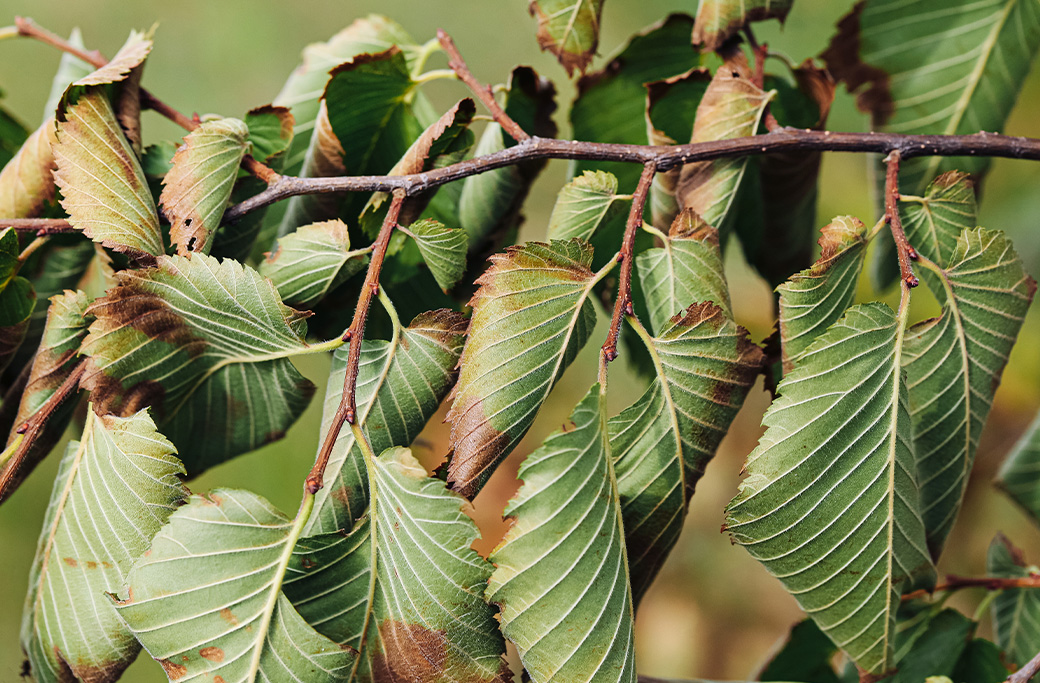
- Brown or crispy leaf edges
- Curling or wilted leaves
- Leaves dropping earlier than expected
- Thin or sparse canopy
- Dry, cracked soil around the tree
-
Newly planted trees are especially vulnerable, but mature trees can also experience drought stress during prolonged dry periods.
2. Leaf Scorch
Leaf scorch is common during hot North Carolina summers. Unlike disease, leaf scorch occurs when leaves lose moisture faster than roots can replace it.
Symptoms Include:
-
-
- Brown edges with green centers
- Dry, brittle leaves
- Damage appearing on the side of the tree receiving the most afternoon sun
-
Although leaf scorch rarely kills a healthy tree outright, repeated stress can weaken it over time.
3. Insect Damage
Certain insects feed on leaves or damage a tree’s vascular system, making it difficult for water and nutrients to reach the canopy.
Common signs include:
-
-
- Holes in leaves
- Chewed edges
- Sticky residue
- Sawdust near the trunk
- Increased insect activity
-
Early treatment often prevents more extensive damage.
4. Tree Diseases
Several fungal and bacterial diseases can cause leaves to discolor during summer.
Symptoms may include:
-
-
- Brown spots
- Black patches
- Yellowing before browning
- Premature leaf drop
-
Due to the facts that symptoms often resemble drought stress, a professional inspection can help determine the true cause.
5. Root Damage
Healthy roots are essential for healthy leaves. Construction, compacted soil, poor drainage, or damaged roots can limit a tree’s ability to absorb water—even if you’ve been watering regularly.
Signs of root problems often include:
-
-
- Browning throughout the canopy
- Slow growth
- Dead branches
- Leaning trees
-
Is My Tree Dying?
Many homeowners immediately ask:
“Why is my tree dying?”
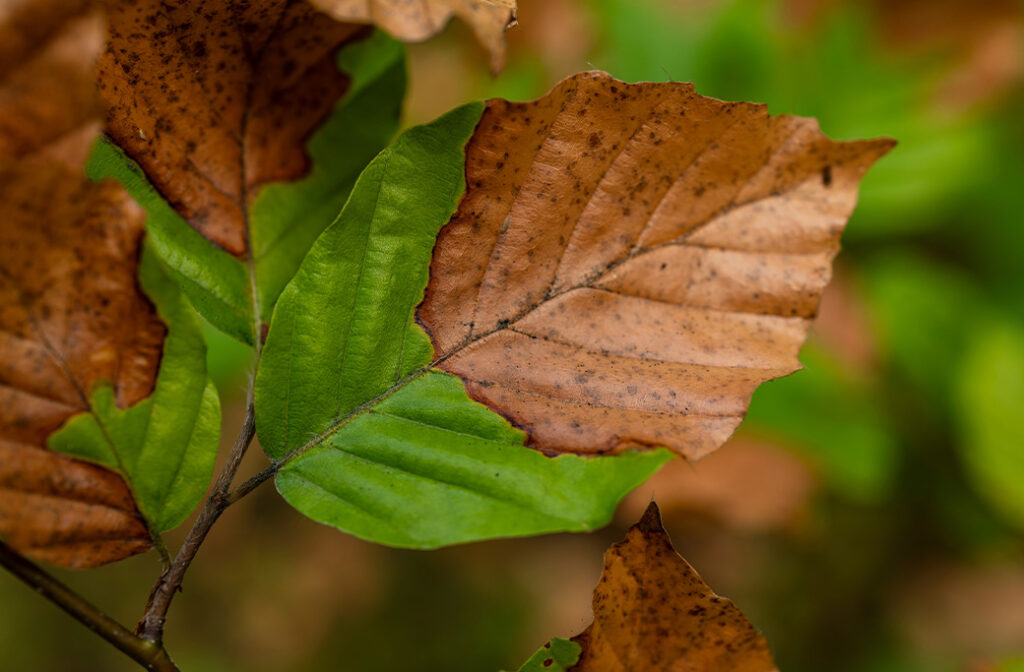
The good news is that brown leaves don’t always mean a tree is dying. Many trees recover once the underlying issue is corrected. However, widespread canopy loss, large dead branches, trunk damage, or severe root problems should never be ignored. If you’re unsure, a professional tree inspection can determine whether the tree is healthy, stressed, or becoming hazardous.
How to Help a Tree Recover
If your tree is suffering from heat or drought stress, there are several steps you can take.
Water Deeply
Instead of watering lightly every day, provide a deep soaking that encourages roots to grow downward. Morning watering is generally the most effective.
Add Mulch
A 2–4-inch layer of organic mulch helps:
-
-
- Retain moisture
- Regulate soil temperature
- Reduce weed competition
- Improve soil over time
-
Be sure to keep mulch several inches away from the trunk to avoid trapping moisture against the bark.
Avoid Over-Pruning
Trees already under stress benefit from keeping as much healthy foliage as possible. Only dead, broken, or hazardous limbs should be removed during periods of extreme heat.
Watch for Additional Symptoms
These may indicate more serious structural issues.
Monitor your tree for:
-
-
- Cracks in the trunk
- Dead limbs
- Leaning
- Mushrooms near the base
- Increased insect activity
-
When Should You Call a Tree Professional?
It’s time to contact a professional if you notice:
-
- Large portions of the canopy turning brown
- Dead branches falling
- Cracks or cavities in the trunk
- Leaning trees
- Sudden leaf loss
- Signs of disease or insect infestation
Prompt evaluation can often save a tree, and prevent costly property damage.
How Shannon & Sons Tree Service Can Help
Our experienced team provides comprehensive tree care services throughout Winston-Salem and the surrounding Triad communities.
Our services include:
-
- Professional tree inspections
- Tree trimming and pruning
- Tree removal
- Storm damage cleanup
- Tree health evaluations
- Preventative maintenance
Whether your tree is suffering from drought stress, disease, or storm damage, we’ll help determine the best course of action.
Why Are My Tree Leaves Turning Brown in Summer?
Seeing tree leaves turning brown in summer doesn’t automatically mean your tree is dying, but it is a sign that something deserves your attention. By identifying the cause early and addressing issues like drought stress, pests, or disease, you can help protect your trees and keep your landscape healthy for years to come.
If you’re concerned about the health of your trees, contact Shannon & Sons Tree Service today to schedule a professional inspection.