For most trees, natural hardwood mulch or untreated wood chips are excellent choices. They help retain moisture, moderate soil temperatures, suppress weeds, and gradually add organic matter to the soil as they break down.
However, different mulch materials have different characteristics. The best choice depends on your landscape, the trees you’re caring for, and what is readily available.
Which Mulch Is Best for Trees?
Hardwood Mulch
Best all-around choice for most homeowners.
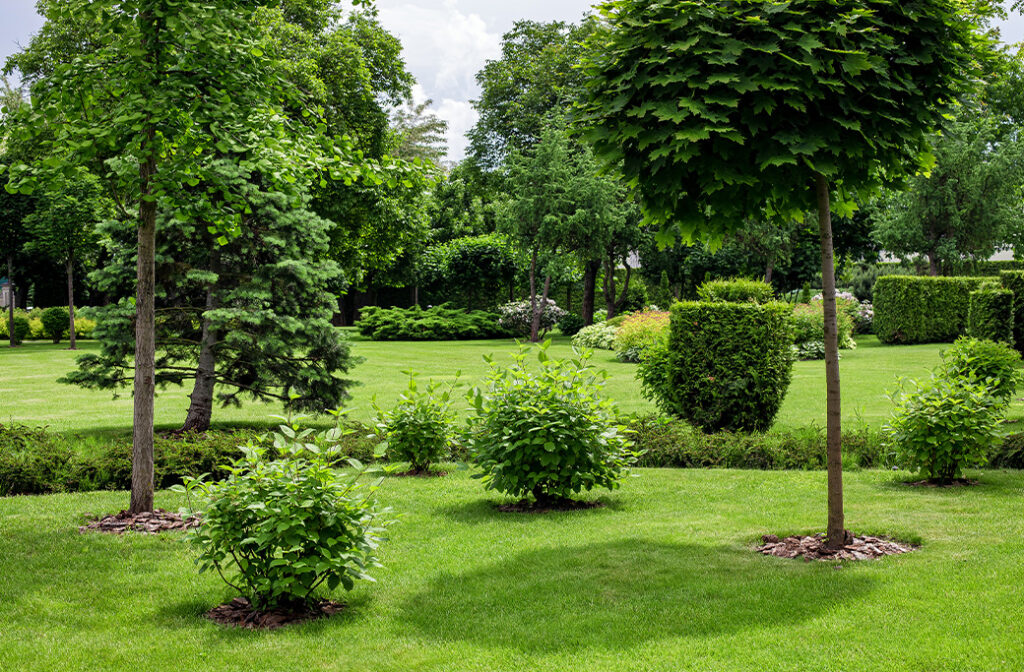
Hardwood mulch is widely available, breaks down gradually, and adds organic matter to the soil. It also provides good moisture retention and temperature regulation around tree roots.
For homeowners in Winston-Salem and the surrounding Triad, natural hardwood mulch is a practical choice for most established landscape trees.
Pine Bark Mulch
A good option for trees and acid-loving plants.
Pine bark is lightweight, attractive, and slow to decompose. Larger pieces can also provide good airflow and drainage. It’s particularly useful in landscape beds where appearance is important.
Cypress Mulch
Cypress mulch can work well, but it’s not necessarily better than hardwood or pine bark.
It is relatively durable and has traditionally been promoted for its resistance to insects and decay. However, there is generally no need to choose cypress specifically for tree health when other natural mulches are readily available.
Dyed Mulch
Dyed mulch is primarily an aesthetic choice.
Black, brown, and red dyed mulches can create a finished, uniform appearance in landscape beds. However, the dye itself doesn’t provide additional benefits to tree health.
If you choose dyed mulch, look for a reputable product made from clean, processed wood rather than construction debris or unknown materials.
Wood Chips
Wood chips are an excellent, natural option, especially around larger trees.
They break down slowly and can provide long-lasting organic matter while helping conserve moisture.
Fresh wood chips aren’t necessarily a problem when used on the soil surface around trees. They simply should not be mixed into the soil, where decomposition can temporarily affect available nitrogen.
Which Mulch Should You Avoid Around Trees?
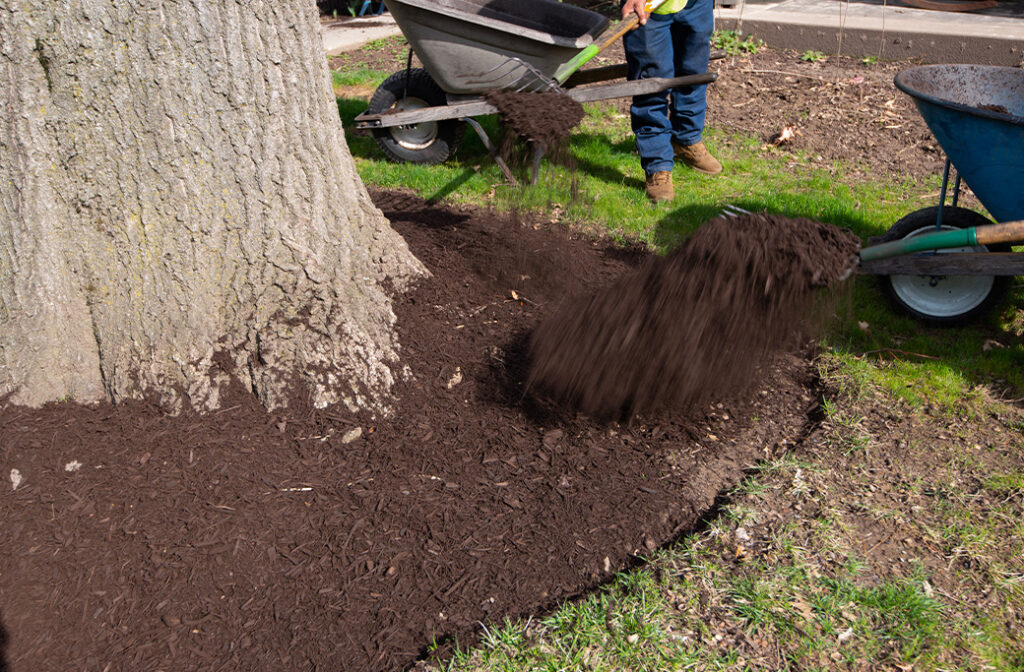
The biggest concern isn’t necessarily the type of mulch. It’s how it’s applied.
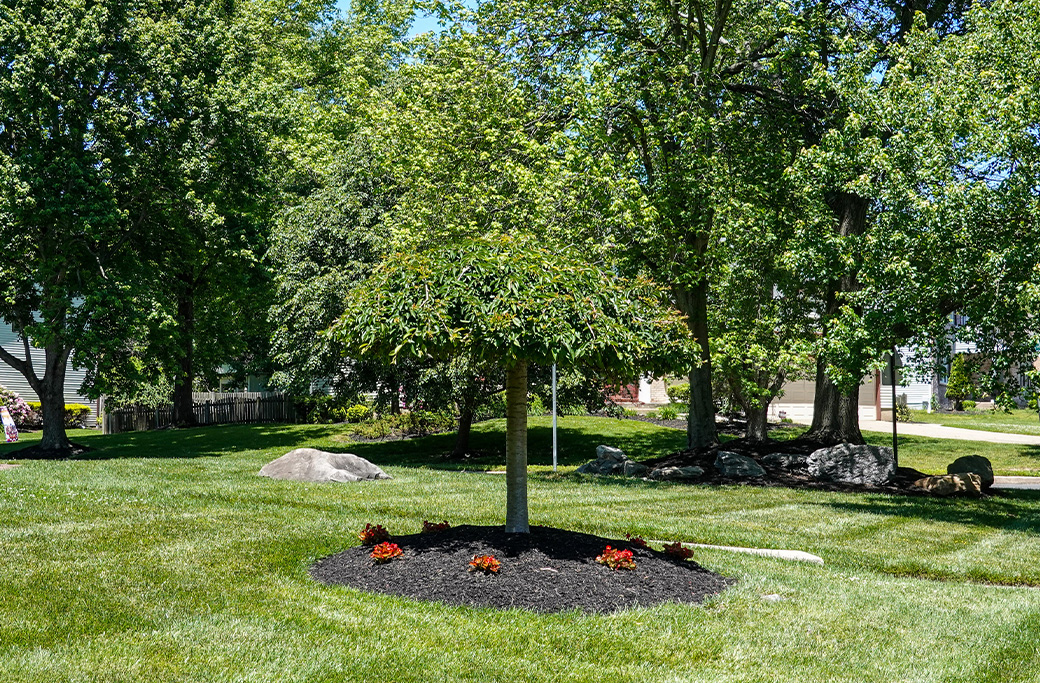
Avoid piling mulch against the trunk or creating a deep mound around the base of the tree. This can trap moisture against the bark and contribute to decay, pests, and other problems.
Instead, spread mulch evenly across the root zone while keeping it several inches away from the trunk.
For detailed instructions on proper application, see our guide to Late Summer Mulching Tips for Healthier Trees.
What Is the Best Mulch for Trees in North Carolina?
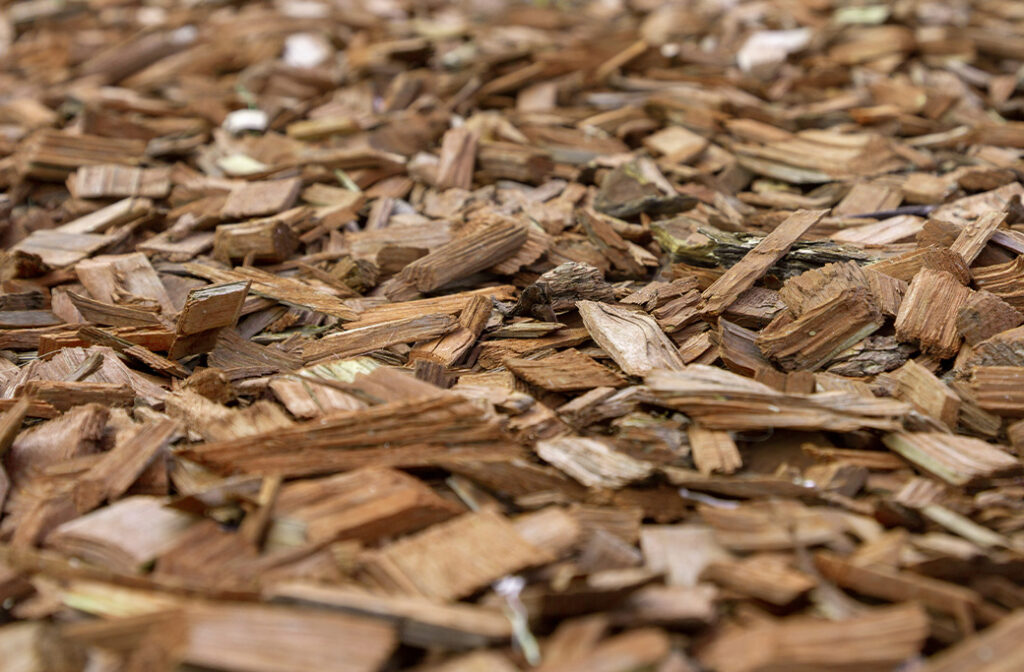
For most homeowners in Winston-Salem and the Triad, natural hardwood mulch or untreated wood chips are excellent choices. Pine bark is another good option, particularly where drainage and appearance are priorities.
Mulch can be particularly helpful during hot, dry periods because it helps retain moisture around tree roots. If your trees are already showing signs of drought stress, such as brown or crispy leaves, learn more in our guide to Why Are My Tree Leaves Turning Brown in Summer?.
The quality and application of the mulch matter more than choosing a particular “perfect” material.
Shannon & Sons Tree Service Can Help
Choosing the right mulch is only part of keeping your trees healthy. Proper placement, depth, watering, and ongoing tree care all matter.
If you’re unsure what type of mulch is best for your trees, or you’re concerned about their overall health, Shannon & Sons Tree Service can help you determine the right approach for your Winston-Salem-area property.