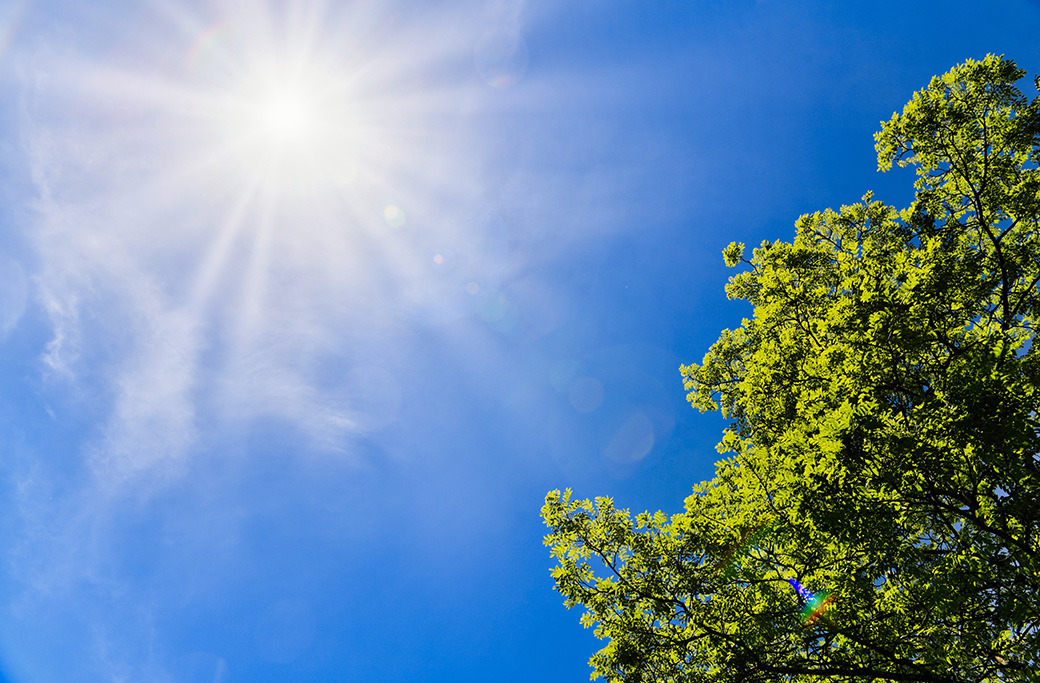
A few scorching summer days may leave your lawn looking tired, but trees can usually handle short periods of heat. Problems begin when high temperatures combine with dry soil, limited rainfall, compacted roots or other stresses for an extended period.
Here in Winston-Salem and across the Piedmont Triad, stretches of hot weather can put even established trees under significant stress. You may notice curling leaves, brown edges, premature leaf drop or a canopy that suddenly looks thinner than it did earlier in the summer.
The important question is: Is your tree temporarily stressed, or is something more serious happening?
Many heat-stressed trees can recover, especially when the problem is recognized early and the root system remains healthy. The first step is knowing what to look for and responding without accidentally putting the tree under even more stress.
What Does Heat Stress Look Like in a Tree?
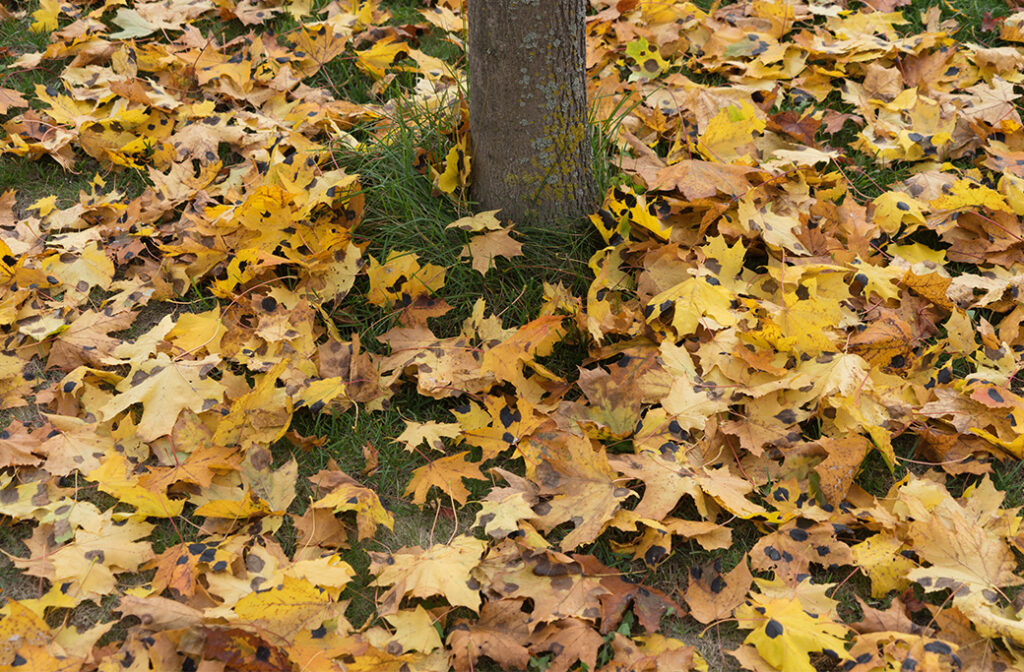
Maple tree leaves showing black spots caused by summer heat stress.
Common signs of tree heat stress include wilting or curling leaves, brown or scorched leaf edges, premature leaf drop, reduced growth and thinning foliage. More severe or prolonged stress can contribute to branch dieback and make a tree more vulnerable to other problems.
Watch for:
-
- Wilted, drooping or curling leaves
- Brown, dry or crispy leaf margins
- Leaves turning yellow or changing color earlier than expected
- Premature leaf drop
- Sparse or thinning foliage
- Reduced new growth
- Small or undersized leaves
- Dieback at branch tips
- Cracking or damage to exposed bark
One symptom by itself does not necessarily mean heat is the cause. Disease, insects, root damage, excessive water and other environmental problems can produce similar symptoms.
That is why the pattern, timing and condition of the entire tree matter.
What Causes Heat Stress in Trees?
Heat stress develops when a tree loses water faster than its roots can replace it.
Trees release water through their leaves in a natural process called transpiration. During hot, sunny or windy weather, that water loss increases. If the roots cannot supply moisture quickly enough, the tree begins conserving resources.
Several conditions can make the problem worse:
-
- Prolonged high temperatures
- Low rainfall or drought
- Compacted soil
- Damaged or restricted roots
- Poor soil conditions
- Competition from turf and nearby plants
- Recent planting or transplanting
- Reflected heat from pavement, driveways, walls or buildings
- Improper watering
- Excessive pruning during stressful weather
A tree growing beside a driveway in full afternoon sun, for example, may experience considerably more heat stress than the same species growing in an open, mulched landscape.
Young trees are particularly vulnerable because their roots have not yet spread far into the surrounding soil. But mature trees aren’t immune. Their larger canopies require substantial amounts of water, and root damage, soil compaction or prolonged drought can make it difficult to keep up.
Heat Stress vs. Drought Stress: What’s the Difference?
Heat stress and drought stress are closely connected, but they aren’t exactly the same thing.
Drought stress occurs when a tree does not have enough available soil moisture. Heat stress occurs when high temperatures cause the tree to lose water and struggle to regulate itself faster than its root system can compensate.
A tree can experience both at the same time—and during a hot, dry North Carolina summer, that’s often what happens.
For more information about protecting trees when rainfall is limited, read our guide to Protecting Your Trees From Drought Stress This Summer.
Can Heat Stress Kill a Mature Tree?
Yes, severe or prolonged heat stress can contribute to the decline or death of a mature tree, especially when the tree is already weakened by drought, root damage, disease, pests or previous environmental stress.
One hot afternoon usually isn’t what kills an otherwise healthy mature tree. The greater concern is cumulative stress.
A tree that repeatedly struggles through extreme heat and inadequate moisture may lose foliage, reduce growth and have fewer resources available for defense and recovery. Environmental stress can also leave trees more susceptible to secondary insect or disease problems.
We’ve covered this question in greater detail in Can Heat Stress Kill Mature Trees?
The takeaway for homeowners is simple: don’t assume that a large, established tree can take care of itself indefinitely just because it has survived previous summers.
Can a Heat-Stressed Tree Recover?
Yes. Many heat-stressed trees can recover if the roots and major branches remain healthy and the underlying cause of the stress is corrected.
Mild symptoms such as temporary wilting or some leaf scorch don’t necessarily mean the tree is dying.
A tree may conserve resources by slowing its growth or dropping some leaves. It can look worse before it looks better, particularly after a prolonged period of hot, dry weather.
Recovery depends on several factors:
-
- How severe the stress was
- How long it lasted
- The tree species
- The tree’s age and overall health
- The condition of its roots
- Whether it experienced drought at the same time
- Whether pests or disease are also present
- Whether the stress occurs repeatedly
A healthy tree experiencing its first difficult summer has a different outlook from a tree that has suffered several years of drought, construction damage and root compaction.
How Long Does It Take a Tree to Recover From Heat Stress?
There isn’t a single recovery timeline.
Minor heat stress may improve after temperatures moderate and adequate soil moisture returns, but visible recovery from more serious stress may take months or extend into the next growing season.
Don’t expect brown or scorched leaves to turn green again. Once leaf tissue has died, it stays damaged. Instead, look at the tree’s overall condition and future growth.
Signs of recovery may include:
-
- Healthy buds
- Stable foliage
- No additional branch dieback
- Normal leaf development the following spring
- New seasonal growth
Trees also respond slowly. Symptoms appearing today may reflect stress that occurred weeks or even months earlier, and some problems affecting mature trees may not become obvious until a later season.
If the canopy continues thinning, larger branches begin dying, or the tree fails to leaf out normally the following spring, it’s time for a closer evaluation.
How Do You Treat Heat Stress in Trees?
There isn’t a product that instantly reverses heat stress. Treatment focuses on reducing additional stress and giving the tree’s root system the conditions it needs to function.
1. Check the Soil Before Adding Water
Wilt does not automatically mean a tree needs more water.
Check the soil several inches below the surface. If it is dry, supplemental watering may be appropriate. If the soil is already wet, adding more water can create a different problem by reducing the oxygen available to roots.
This distinction is particularly important in areas with heavier soils or poor drainage.
2. Water Deeply Rather Than Frequently
When established trees need supplemental water, deep, slow watering is generally more beneficial than frequent shallow sprinkling.
The goal is to deliver moisture throughout the active root zone rather than simply wetting the soil next to the trunk.
A soaker hose or slow trickle of water can help moisture soak into the soil instead of running across the surface.
Spread watering across the root zone. Tree roots extend well beyond the trunk and often beyond the edge of the canopy.
3. Water During the Cooler Part of the Day
Watering when temperatures are cooler reduces evaporation.
If you’re using a method that wets the leaves, morning is preferable so foliage has time to dry. When water is being delivered directly to the soil, the focus should be on slow, thorough absorption.
4. Add or Correct Mulch
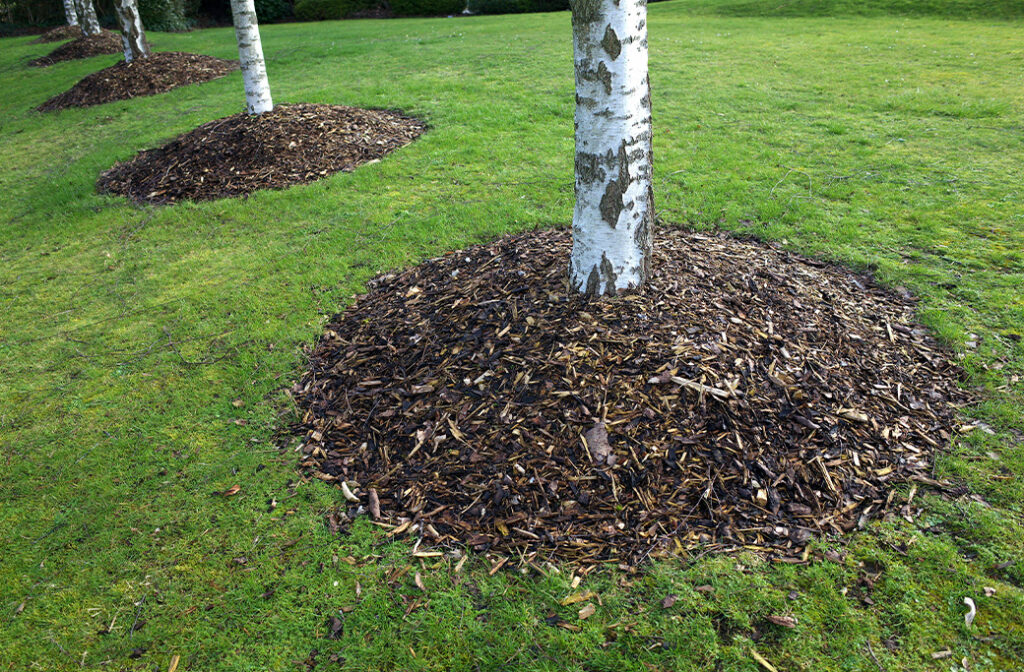
A proper layer of organic mulch can help keep the soil cooler, conserve moisture and reduce competition from weeds and grass.
Wood chips and shredded bark are good choices.
Aim for roughly 2 to 3 inches of mulch, and spread it over as much of the root zone as practical.
Most importantly, don’t pile it against the trunk.
The tree should look like it has a broad mulch ring, not a mulch volcano.
For more help choosing and applying mulch, see What Is the Best Mulch for Trees? and our Late-Summer Mulching Tips for Healthier Trees.
5. Avoid Heavy Pruning During Extreme Heat
A stressed tree doesn’t need another major stressor.
Avoid removing large portions of healthy canopy simply because some leaves look scorched or wilted. Leaves are how the tree produces energy, and excessive pruning can stimulate tender new growth while reducing the tree’s ability to recover.
Dead, broken or hazardous branches are different and may need attention for safety.
If you’re unsure whether pruning should wait, learn more in Is It Too Hot to Trim Trees? or contact Shannon & Sons about professional tree pruning.
6. Don’t Automatically Fertilize a Stressed Tree
More fertilizer isn’t necessarily more help.
Fertilizer can stimulate new growth at a time when a stressed tree may not have enough water or resources to support it. Correcting moisture, root-zone and soil problems should generally come before trying to force new growth.
If you suspect a nutrient problem, determine what the tree and soil actually need before applying fertilizer.
How Much and How Often Should You Water a Heat-Stressed Tree?

There is no universal number of gallons or one schedule that works for every mature tree.
Water needs change with:
-
- Tree size and species
- Soil type
- Drainage
- Recent rainfall
- Temperature and wind
- Slope
- Sun exposure
- Mulch
- Root condition
- How recently the tree was planted
For established trees during prolonged dry periods, the goal is deep, infrequent watering across the root zone, allowing the soil to begin drying between waterings rather than keeping it constantly saturated.
A tree in fast-draining soil may need attention sooner than one growing in moisture-retentive soil. Heavy or compacted soil needs slower application to prevent runoff and overwatering.
Not sure whether your tree actually needs water? Our guide, How Often Should Trees Be Watered During a North Carolina Summer?, takes a closer look at summer watering.
What Should You Avoid When a Tree Is Heat-Stressed?
Sometimes helping a stressed tree is as much about what you don’t do.
Avoid:
-
- Daily shallow watering
- Saturating already-wet soil
- Piling mulch against the trunk
- Heavy pruning during extreme heat
- Fertilizing simply to force new growth
- Cutting roots or disturbing soil beneath the canopy
- Parking or driving heavy equipment over the root zone
- Assuming every brown leaf is caused by heat
- Removing a mature tree solely because it dropped leaves during a hot spell
Give the tree time to respond unless there is a safety concern.
Is It Heat Stress, Drought, Disease or Insects?
This can be the hardest question for homeowners to answer.
Heat and drought stress often affect broad portions of the canopy and correspond with periods of hot or dry weather. Leaf margins may scorch, foliage may wilt and leaves may drop prematurely.
Pest or disease problems may produce more distinctive clues, including:
-
- Unusual spotting or lesions
- Holes or chewing damage
- Sawdust-like material
- Visible insects
- Cankers
- Oozing sap
- Fungal growth
- Damage concentrated on particular branches
- Progressive dieback unrelated to weather
However, symptoms overlap. A tree can also have more than one problem at the same time. In fact, environmental stress can make a tree more vulnerable to certain secondary problems.
If symptoms continue despite improved weather and proper watering—or you see structural damage, significant dieback or signs of pests or disease—a professional evaluation can help determine what’s actually happening.
When Does a Heat-Stressed Tree Need Professional Evaluation?
Consider having your tree evaluated if you notice:
-
- Significant canopy thinning
- Extensive or rapidly progressing leaf loss
- Large dead branches
- Cracks or cavities in the trunk
- Significant bark damage
- Mushrooms or fungal growth around the trunk or root zone
- Signs of insects or disease
- Recent excavation or construction near the roots
- A tree leaning or becoming unstable
- Little or no improvement after weather conditions moderate
- Poor leaf development the following growing season
Safety becomes especially important when a stressed tree is close to a house, driveway, road, play area or other frequently used space.
A stressed tree doesn’t automatically need to be removed. A professional evaluation can help determine whether appropriate tree care or pruning may help, whether the tree should simply be monitored, or whether significant decline or structural problems make tree removal the safer option.
Helping Trees Handle North Carolina Summer Heat
North Carolina trees have always dealt with summer heat, but conditions around our homes can make that heat harder to tolerate.
Compacted lawns, pavement, construction, limited rooting space, reflected heat and competition for water can all affect how well a tree handles a hot, dry stretch.
You can help improve resilience by:
-
- Maintaining an appropriate mulch zone
- Watering when conditions warrant it
- Protecting roots from compaction and construction
- Avoiding unnecessary summer pruning
- Watching for changes in the canopy
- Addressing problems before the tree is severely stressed
Most importantly, get to know what your trees normally look like. Changes are much easier to spot when you have a baseline for comparison.
Need Help With a Stressed Tree in Winston-Salem or the Piedmont Triad?
Not every scorched leaf means a tree is dying—but declining mature trees shouldn’t be ignored.
Shannon & Sons Tree Service provides professional tree care throughout Winston-Salem and surrounding Triad communities. If you’re concerned about unusual leaf loss, branch dieback, structural problems or a tree that simply hasn’t bounced back after summer heat, we can take a closer look and help determine the appropriate next step.
Schedule a free estimate with Shannon & Sons Tree Service or call 336-244-2633.