When the temperature drops and the leaves fall, it’s easy to assume your yard work is done for the year. The lawn mower goes into the shed, the garden hoses are coiled up, and most homeowners retreat indoors to stay warm. However, arborists know that winter is actually the busiest and most important season for tree care.
At Shannon & Sons Tree Service, serving Winston-Salem and the surrounding Triad areas, we often remind our clients that trees don’t simply shut down when the cold weather hits. While they may look quiet on the surface, your trees are in a vital state of dormancy that makes them perfectly suited for maintenance. Neglecting them now can lead to significant headaches and expenses when spring arrives or when the next ice storm hits.
Taking care of your trees during the colder months isn’t just about tidiness; it is a safety measure for your property and a health booster for the trees themselves. By understanding the unique benefits of winter tree care, you can ensure your landscape remains safe, beautiful, and vibrant year-round.
Why Winter is Ideal for Tree Maintenance
While spring and summer are the seasons of growth, winter is the season of structure. There are several biological and practical reasons why arborists prefer to perform significant maintenance work during this time of year.
Science of Dormancy
During winter, trees enter a state of dormancy, which is similar to hibernation. The flow of sap slows down, and the tree conserves its energy in the root system rather than expending it on growing leaves or fruit. This biological pause creates the perfect window for pruning.
When you cut a tree during its active growing season, it can cause stress, as the tree tries to heal the wound while simultaneously supporting growth. In contrast, pruning during dormancy minimizes this stress. The wounds from pruning cuts heal much faster once the tree wakes up in the spring, and because there is no sap flowing to attract pests, the risk of disease transmission or insect infestation is significantly lower. Furthermore, winter pruning invigorates the tree, often resulting in a burst of vigorous, healthy growth as soon as the weather warms up.
Easier Identification of Problems
Attempting to assess the structural integrity of a tree in July is like trying to inspect the framework of a house while the drywall is still up. The dense canopy of leaves can hide a multitude of issues.
In winter, the “skeleton” of the tree is revealed. Without the obstruction of foliage, our team at Shannon & Sons Tree Service can clearly see the architecture of the branches. This visibility makes it much easier to identify deadwood, crossing branches that are rubbing against each other, weak branch unions, and deep splits in the bark. Identifying these structural defects early allows us to address them before they become major hazards.
Preparation for Storms
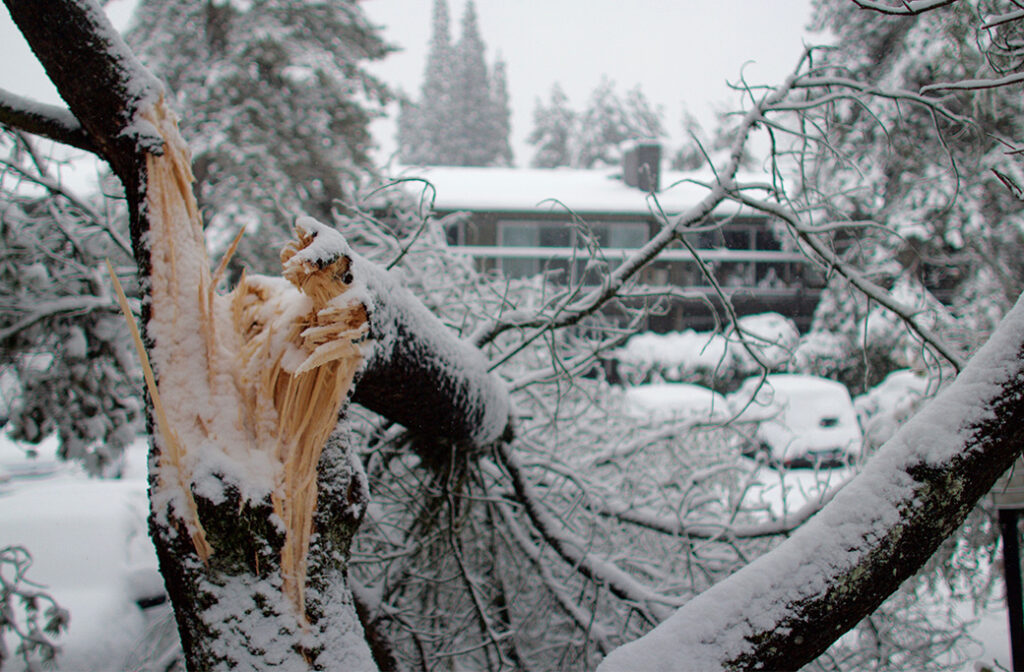
Residents of the Triad area know that North Carolina winters can be unpredictable. Ice storms are a particular threat to our region. When ice accumulates on branches, it adds immense weight; a half-inch of ice can add upward of 500 pounds to a single branch. If a tree hasn’t been properly maintained, this added weight can cause limbs to snap or entire trees to topple, potentially damaging your home, vehicles, or power lines. Pruning before the worst of the winter weather hits is the best insurance policy for your property.
Key Winter Tree Maintenance Tasks
Winter tree care involves more than just chopping off a few stray branches. It requires a strategic approach to ensure the long-term health and stability of the tree.
Pruning and Trimming
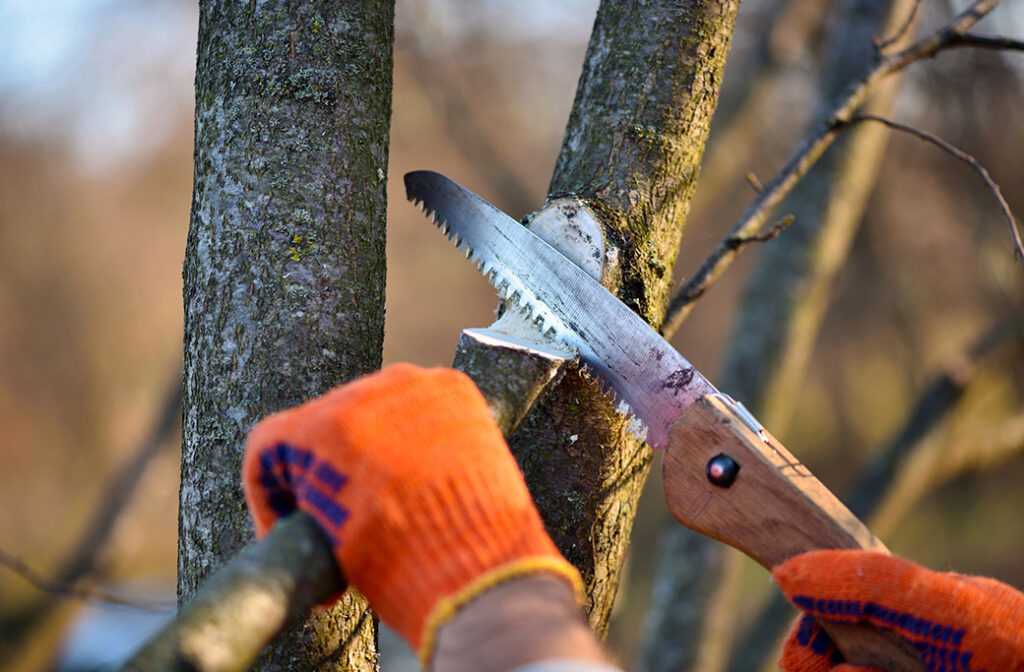
The primary task during winter is the removal of dead, diseased, or damaged wood. This process, often called “cleaning” the canopy, prevents decay from spreading to the healthy parts of the tree. Beyond removing deadwood, we also focus on removing unbalanced growth. If a tree is lopsided, heavy winds or ice can easily pull it over.
Proper winter trimming techniques also involve “raising the crown” (removing lower branches for clearance) and “thinning” (selectively removing branches to allow wind to pass through the tree rather than pushing against it). This reduces the “sail effect” during winter gusts, keeping the tree standing tall.
Bracing and Supports
For trees that have sentimental value or are key parts of your landscape but suffer from structural weaknesses, removal isn’t the only option. Winter is an excellent time to install bracing and cabling systems.
If a tree has a weak “V-shaped” crotch where two main stems meet, it is prone to splitting down the middle under the weight of snow or ice. We can install high-strength cables high in the canopy to limit how far the branches can move apart, along with steel rods lower down to brace the trunk. This reinforcement provides flexibility during storms while preventing catastrophic failure.
Regular Tree Health Monitoring
Even if you aren’t holding a chainsaw, you can still participate in tree care. Winter is the time to monitor for signs of distress. Walk around your property and look for:
-
- Heaving soil at the base of the trunk (a sign the roots are failing).
- Mushrooms or fungal growth on the bark.
- New or widening cracks in the trunk.
- A noticeable lean that wasn’t there before.
Preparing Trees for Winter Storms
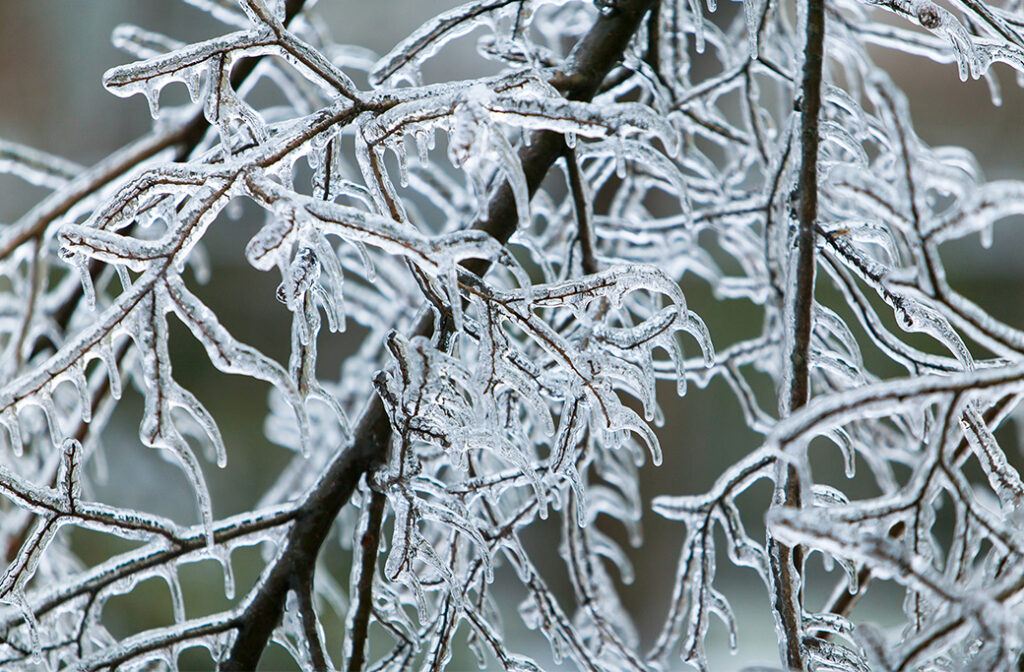
Preparation is the difference between a tree that weathers the storm and one that becomes a liability.
Assessing Potential Risks
Some trees are naturally more vulnerable to ice storms than others. Fast-growing species often have brittle wood that snaps easily, while trees with broad, spreading canopies catch more freezing rain. We recommend a professional assessment to identify which trees on your property are “high risk.” We look for trees with co-dominant stems (two trunks of equal size) which are notoriously weak, as well as trees with existing decay pockets.
Preventative Measures
The most effective way to prepare for an ice storm is preemptive reduction. By shortening over-extended branches, we reduce the leverage that ice and wind can exert on the tree. Think of it as shortening a lever; the shorter it is, the harder it is to break. We also suggest inspecting your trees after any significant weather event, even if you don’t see immediate damage.
Post-Storm Assessment
If a storm does strike, safety is of the utmost importance. Never approach a tree that is touching a power line. After the ice melts, inspect your trees for hanging limbs (often called “widowmakers”) that are detached but caught in the canopy. These can fall at any moment. Also, look for splintered trunks and check if any trees have shifted and are leaning toward your home.
Shannon & Sons Tree Service Winter Solutions
At Shannon & Sons, we offer a comprehensive suite of services designed specifically for the winter months. We understand that every property in Winston-Salem is unique, and we tailor our approach accordingly.
Professional Winter Tree Care
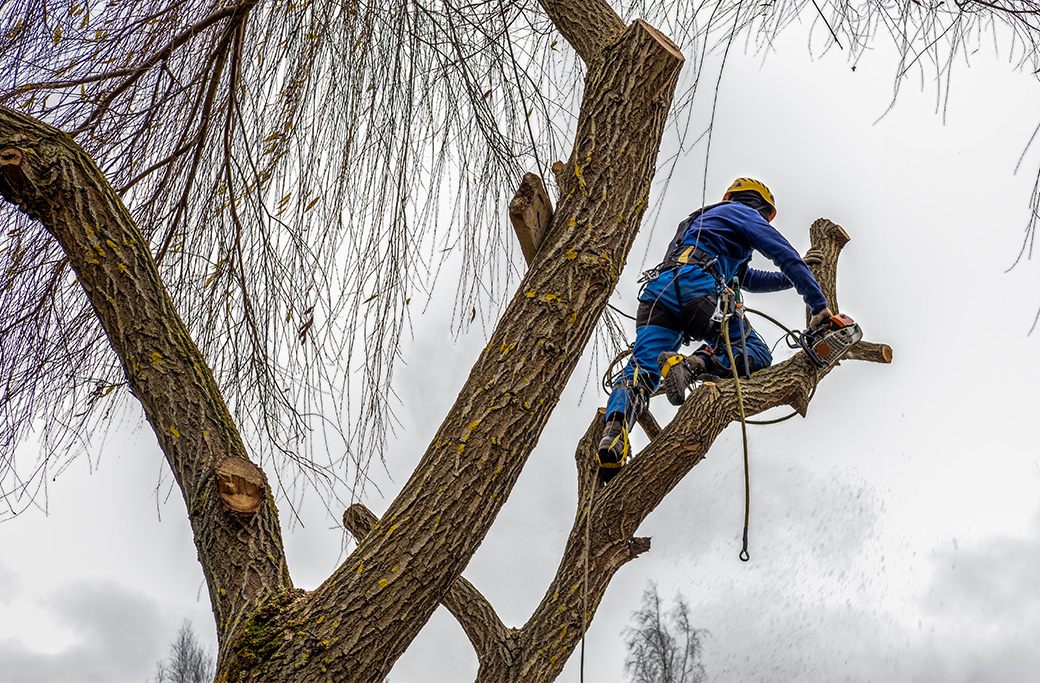
Our team brings decades of combined experience to every job. We specialize in safe, effective winter pruning that respects the biology of the tree. Whether you need a hazardous pine removed before the next freeze or a decorative maple shaped for spring aesthetics, we have the equipment and expertise to handle it safely.
Firewood Delivery
There is nothing quite like the warmth of a wood-burning fire to keep the winter chill at bay. In addition to tree care, we provide a reliable firewood delivery service. We offer high-quality, seasoned firewood that burns cleaner, hotter, and more efficiently than green wood. Using properly seasoned wood reduces creosote buildup in your chimney and gives you more heat for your money.
Dual-Service Solution
We believe in efficiency and sustainability. Our dual-service solution integrates our tree maintenance with our firewood delivery. Often, the wood from tree removals or major pruning jobs can be repurposed. This holistic approach minimizes waste and ensures that our operations are as eco-friendly as possible, all while meeting your specific needs as a homeowner.
Why Winter Is the Best Time for Tree Maintenance
Winter is not a time to ignore your landscape; it is the season to invest in it. By taking advantage of tree dormancy, better visibility, and preventative maintenance, you can protect your property from storm damage and set your trees up for a lush, healthy spring.
Don’t wait until the ice is already on the branches to think about tree safety. Contact Shannon & Sons Tree Service today to schedule a consultation. We are committed to providing the Winston-Salem and Triad areas with top-quality workmanship, safety-first procedures, and excellent customer satisfaction. Let us help you keep your property safe and warm this winter.