If your oak tree is dropping leaves in July or August, you may be wondering if something is seriously wrong. While some leaf loss is a normal response to summer conditions, excessive or premature leaf drop can also signal drought stress, disease, insect activity, or root problems.
The key is knowing how much leaf drop is normal and when it’s time to have your tree professionally inspected.
At Shannon & Sons Tree Service, we help homeowners throughout Winston-Salem and the Triad identify tree health issues early so small concerns don’t become costly problems.
Is It Normal for Oak Trees to Lose Leaves in Summer?
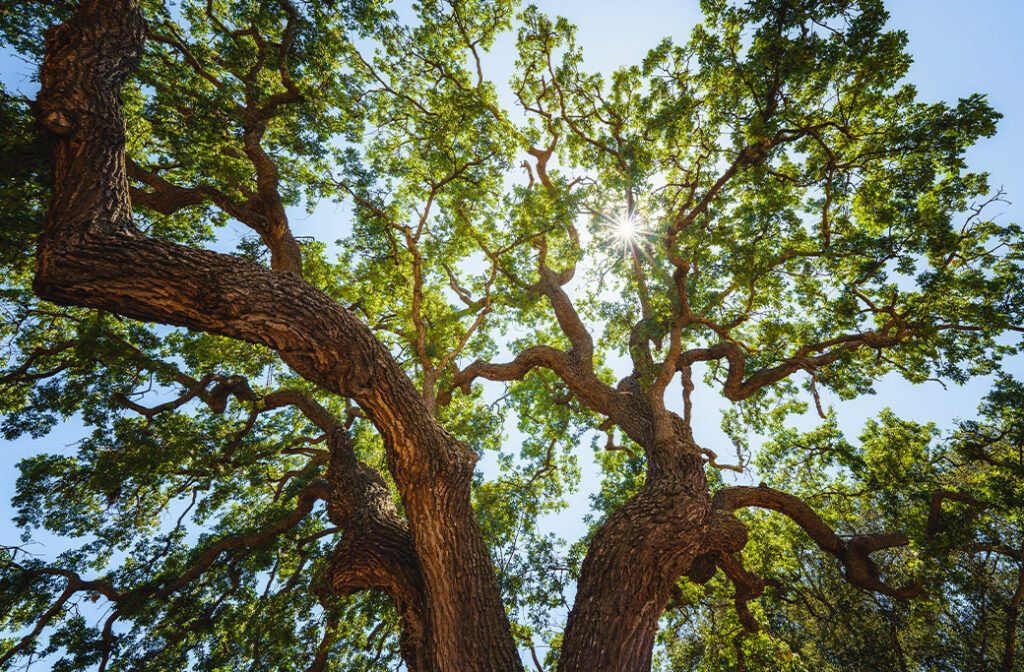
Properly mulched oak tree helping retain moisture during hot weather.”
Yes—some leaf drop during summer is perfectly normal.
Oak trees naturally shed a portion of their older leaves throughout the growing season, especially after periods of hot weather or environmental stress.
However, if large sections of the canopy begin thinning, leaves turn brown before falling, or entire branches lose their foliage, your tree may be trying to tell you something.
Why Is My Oak Tree Dropping Leaves?
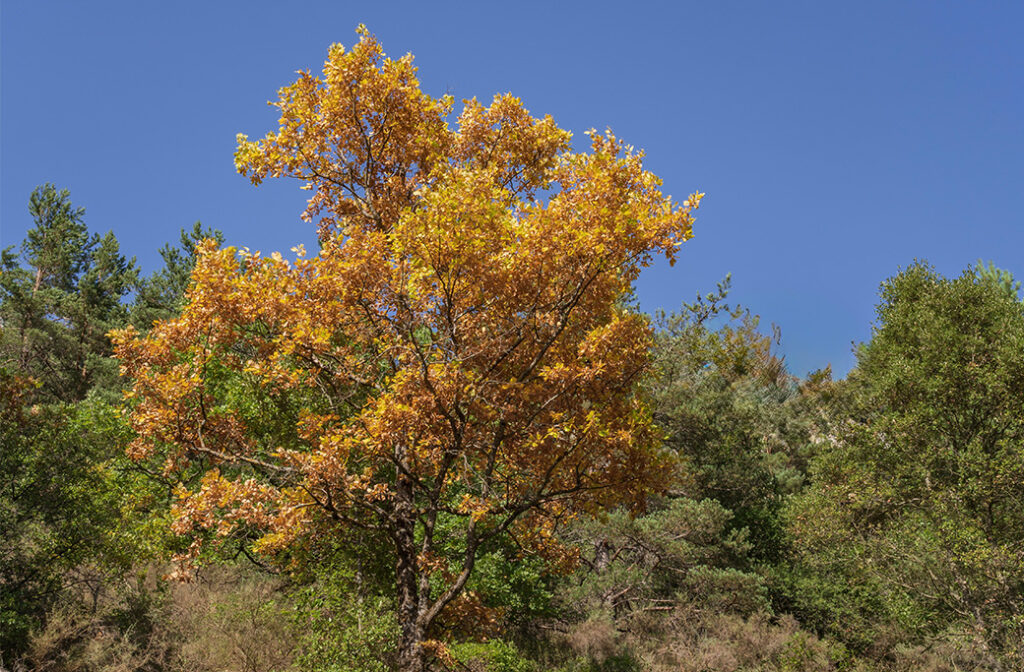
Several factors can cause an oak tree to lose leaves before fall.
Drought Stress
One of the most common causes is drought stress.
When rainfall is limited and temperatures remain high, oak trees conserve moisture by shedding some of their leaves.
Signs of drought stress include:
-
- Brown leaf edges
- Curling leaves
- Smaller-than-normal leaves
- Premature leaf drop
- Dry, cracked soil
Deep watering during extended dry periods can often help reduce stress.
Natural Leaf Shedding
Oak trees don’t keep every leaf all season. It’s common for older interior leaves to yellow and fall as the tree directs energy toward newer growth near the outer canopy.
This type of leaf drop is usually light and evenly distributed throughout the tree.
Heat Stress
North Carolina summers can be extremely hot.
Extended periods of high temperatures may cause leaves to dry out, scorch, or drop earlier than usual, particularly if rainfall has been limited.
Insect Activity
Certain insects feed on oak leaves or interfere with the tree’s ability to move water and nutrients.
Watch for:
-
-
- Holes in leaves
- Chewed edges
- Sticky residue
- Increased insect activity
- Leaves with unusual discoloration
-
Early treatment can often prevent more significant damage.
Disease
Fungal diseases can also cause premature leaf drop.
Symptoms may include:
-
-
- Brown or black spots
- Yellowing leaves
- Leaf blotches
- Powdery growth
- Early leaf loss
-
If symptoms appear throughout the canopy, a professional evaluation is recommended.
Root Problems
Healthy roots are essential for healthy leaves. Construction, compacted soil, poor drainage, or root damage can limit water uptake and lead to leaf drop even if you’re watering regularly.
When Should You Be Concerned?
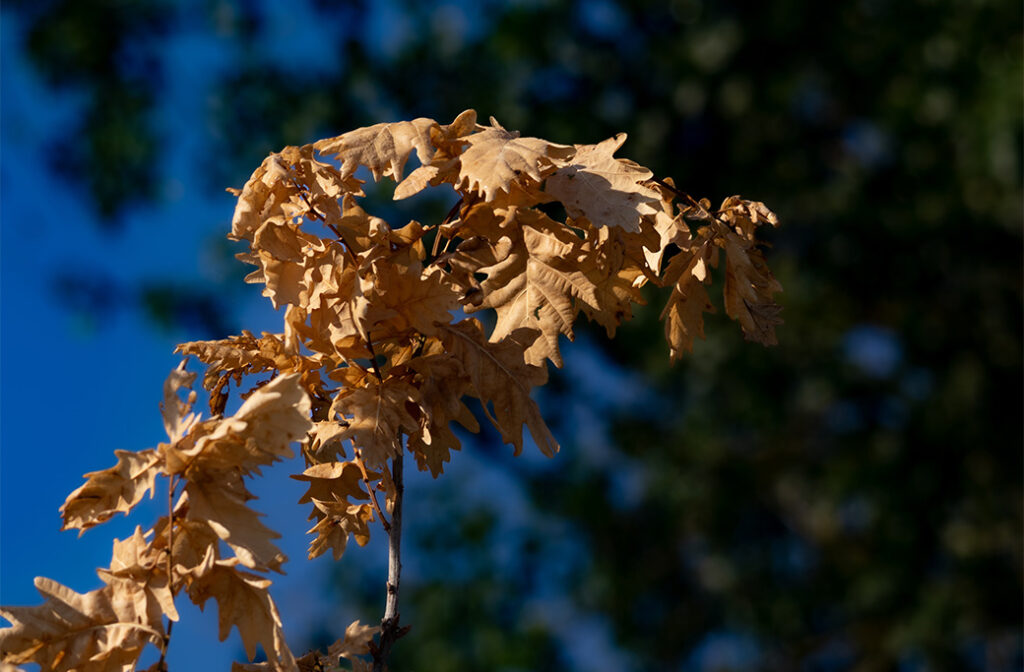
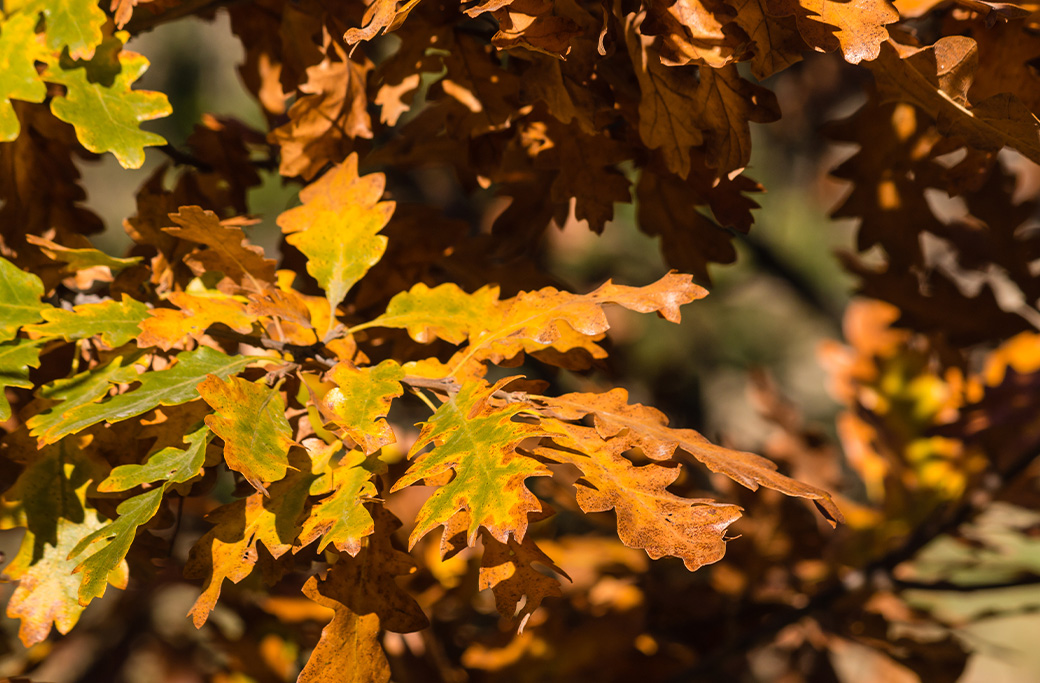
Close-up of an oak tree branch with dry brown leaves caused by summer drought stress.
A small amount of leaf loss is rarely a reason to panic.
However, you should contact a tree professional if you notice:
-
- Large sections of the canopy becoming bare
- Entire branches losing leaves
- Cracks in the trunk
- Mushrooms growing near the base
- A tree that suddenly begins leaning
- Dead branches
- Excessive leaf drop year after year
These symptoms may indicate structural or health problems that require professional attention.
How Can You Help an Oak Tree Recover?
Many healthy oak trees recover from summer stress with proper care.
Water Deeply During Dry Weather
Provide slow, deep watering around the tree’s drip line rather than frequent shallow watering.
Apply Organic Mulch
A 2–4-inch layer of mulch helps:
-
- Retain soil moisture
- Keep roots cooler
- Reduce weed competition
- Improve soil health
Always keep mulch several inches away from the trunk.
Avoid Damaging the Root Zone
Limit heavy equipment, soil compaction, and excavation around established trees whenever possible.
Don’t Over-Prune
Avoid removing healthy limbs during periods of extreme summer heat unless they’re damaged or hazardous.
Can a Tree Recover After Losing Leaves?
In many cases, yes.
If drought stress or temporary environmental conditions are the cause, healthy oak trees often recover with proper watering and care. However, repeated leaf loss, severe canopy thinning, or signs of disease should be evaluated before permanent damage occurs.
When Should You Schedule a Tree Inspection?
Consider scheduling an inspection if:
-
- Leaf drop seems excessive.
- Brown leaves continue spreading.
- Branches appear dead.
- You notice signs of insects or disease.
- The tree is close to your home or other structures.
A professional inspection can identify hidden issues before they become hazardous.
How Shannon & Sons Tree Service Can Help
Whether your oak tree is experiencing drought stress, insect damage, disease, or unexplained leaf loss, Shannon & Sons Tree Service provides expert tree care throughout Winston-Salem and the surrounding Triad.
Our services include:
-
- Tree health evaluations
- Tree trimming and pruning
- Tree removal
- Storm damage cleanup
- Preventative tree maintenance
Our experienced team can determine what’s causing your oak tree to lose leaves and recommend the best solution.
Why Are My Oak Tree Leaves Falling in Summer?
Seeing your oak tree lose leaves during the summer can be alarming, but it doesn’t always mean your tree is dying. By recognizing the difference between normal seasonal leaf drop and signs of stress or disease, you can take action early and help protect one of your property’s most valuable assets.
If you’re concerned about your oak trees, contact Shannon & Sons Tree Service for a professional inspection and expert recommendations.